Brandywine Tomatoes: 5 Massive Problems to Deal With
Introduction
Few tomatoes have achieved a reputation like Brandywine tomatoes. Its enormous pink fruits, unusual potato-shaped leaves, long-growing vines, and famously rich flavor have made it one of the most recognizable heirloom tomatoes in North American gardens. Yet Brandywine doesn’t simply grow itself. It can be slow to mature, relatively modest in yield, sensitive to stressful weather, and prone to cracking and uneven ripening. That combination is part of what makes it interesting. Brandywine rewards gardeners who understand what the plant needs rather than treating it like an ordinary supermarket tomato.
The name itself can also be confusing. Several different tomatoes are sold under the Brandywine name, including pink, red, yellow, and other selections. The classic Brandywine discussed in this blog is the large, pink-fruited, potato-leaf type commonly associated with Sudduth’s strain. Cornell’s Vegetable Varieties for Gardeners describes it as an indeterminate heirloom producing deeply lobed, deep-pink fruits commonly weighing 10 to 24 ounces, while Rutgers identifies the traditional type as a late-season, potato-leaf, indeterminate tomato grown primarily for fresh eating.
What Makes Brandywine Tomatoes Different?
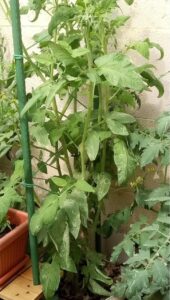
Brandywine tomatoes are an heirloom variety of Solanum lycopersicum. It is open-pollinated and indeterminate, meaning its main stems continue growing and producing flower clusters throughout the season rather than stopping at a predetermined height. The plant has one feature that makes it particularly easy to recognize: potato-leaf foliage. Instead of the deeply serrated leaves seen on many modern tomato cultivars, Brandywine’s leaves are broad, smooth-edged, and somewhat similar in appearance to potato foliage.
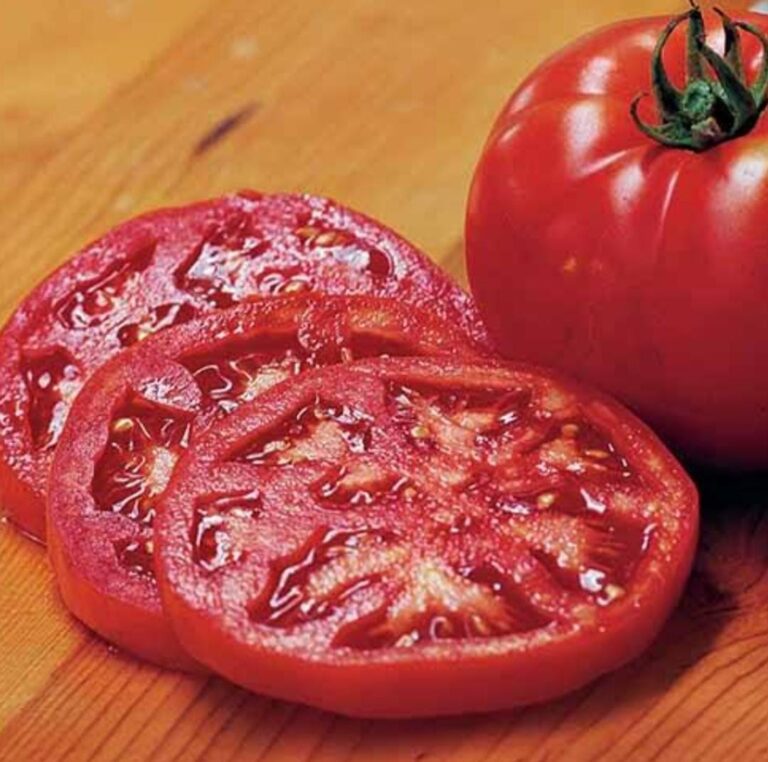
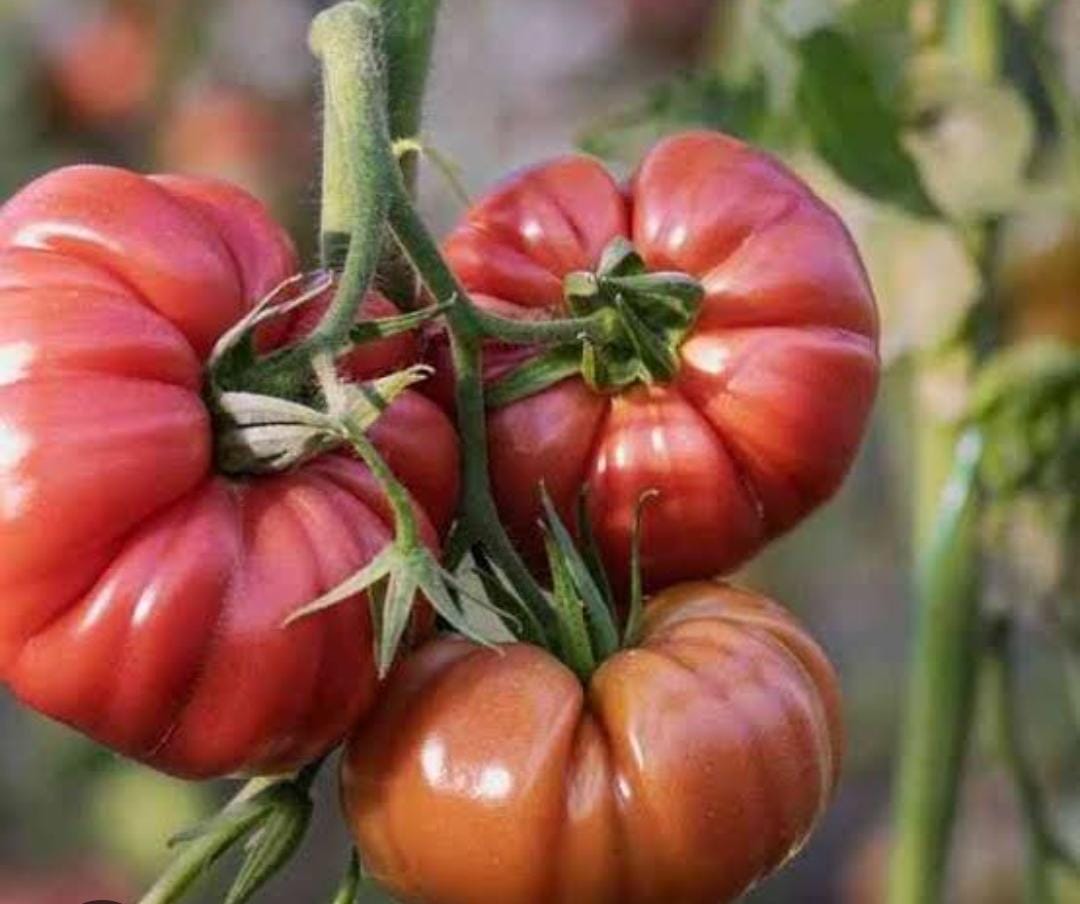
The fruit is equally distinctive. Classic Brandywine produces large, flattened, or oblate beefsteak tomatoes with pink skin and pink-red flesh. Individual fruits can become exceptionally large, with reputable seed sources commonly listing fruit in the 10- to 16-ounce range and some descriptions reporting fruits approaching or exceeding a pound. The tomato’s flavor is its real attraction. A ripe Brandywine has a substantial, juicy texture and a complex balance between sweetness, acidity, and characteristic tomato flavor.
However, flavor is influenced by growing conditions, maturity, and the specific Brandywine tomato strain, so it is better to regard its renowned taste as strong potential rather than a guarantee. That distinction matters because the name “Brandywine” has been applied to multiple tomato lines over the years.
The Complicated History Behind Brandywine
Brandywine tomatoes have an unusual and mysterious history for such a famous vegetable. Older seed catalogs contain references to tomatoes resembling Brandywine, and Burpee has been reported to have offered a Brandywine under its name in the late nineteenth century. The University of Arkansas Cooperative Extension notes that Brandywine tomatoes were listed by Burpee as early as 1886. However, the precise connection between those nineteenth-century catalog tomatoes and the Brandywine tomatoes grown by gardeners today is not completely established.
The story becomes clearer in the twentieth century. Tomato collector Ben Quisenberry obtained seeds from Dorris Sudduth Hill, whose family reportedly had maintained the tomato for many decades. Quisenberry subsequently helped introduce the strain to the wider heirloom-growing community, and the tomato appeared in the Seed Savers Exchange network in 1982. This is why the name “Sudduth’s strain” is important. It helps distinguish the famous pink potato-leaf Brandywine from other tomatoes that acquired Brandywine in their names.
The often-repeated claim that Brandywine tomatoes are definitively Amish tomatoes should therefore be treated cautiously. The historical record is not strong enough to establish a simple, uncontested origin story. Craig LeHoullier, a well-known tomato historian and seed preservationist, has documented the uncertainty surrounding the variety’s early history and the appearance of multiple Brandywine strains. In other words, Brandywine tomatoes have a genuine heirloom history, but their complete family tree remains partly unresolved.
Choosing the Right Brandywine Seeds
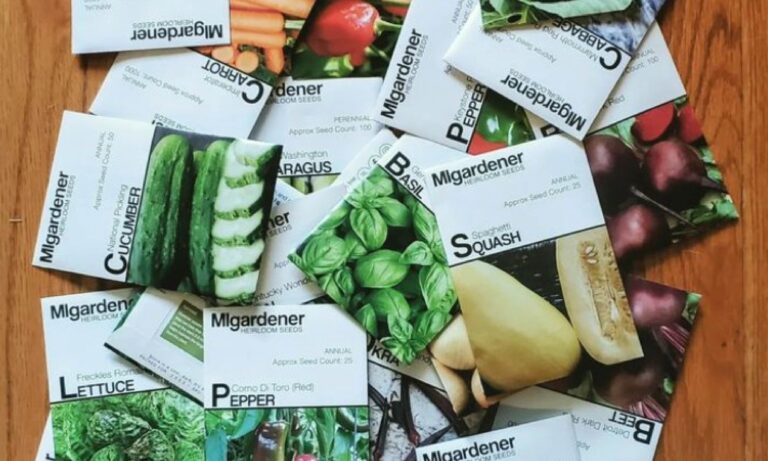
One of the most important decisions comes before planting. If you buy a packet labeled simply “Brandywine,” do not automatically assume every seed represents exactly the same genetic line. Over decades of seed exchange, commercial propagation, accidental crossing, and inconsistent naming, several different tomatoes have circulated under the Brandywine name. The classic pink Brandywine tomatoes are generally associated with potato-leaf foliage and large pink beefsteak fruit. Some other Brandywine selections have regular leaves or produce fruits of different colors.
Seed Savers Exchange, for example, has historically distinguished the pink Sudduth’s strain from a red Brandywine. Its catalog described Sudduth’s strain as an indeterminate potato-leaf plant producing large pink beefsteak fruits, while its Red Brandywine was described separately. For gardeners specifically seeking the classic experience, look for a reputable seed source that clearly identifies the strain rather than relying solely on the word “Brandywine.”
That small amount of research can prevent one of the most frustrating experiences in heirloom gardening: growing a tomato that carries a famous name but behaves very differently from the tomato you expected.
Starting Brandywine Tomatoes From Seed
Brandywine tomatoes’ relatively long growing season makes an early start particularly useful in regions with short summers. Tomatoes are warm-season plants. Pennsylvania State University recommends transplanting tomatoes only after the soil has warmed to about 60°F at a depth of approximately 3 inches. Cool conditions can interfere with growth, pollination, and maturation, while temperatures below about 55°F are particularly stressful for tomatoes.
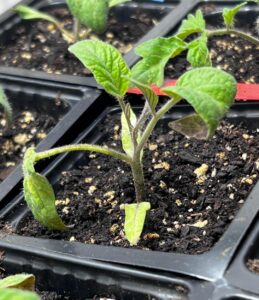
For home gardeners, Brandywine tomatoes usually start indoors several weeks before the local outdoor transplanting date. A commercial seed source such as Rupp Seeds recommends beginning Brandywine in a greenhouse approximately four to six weeks before the intended planting date. The objective is not simply to produce the largest possible seedling. A healthy transplant should have a sturdy stem, healthy green foliage, and a well-developed root system without being excessively tall and weak.
Give seedlings strong light and avoid keeping the growing medium continuously saturated. Once outdoor conditions become suitable, gradually expose the plants to outdoor conditions rather than moving them abruptly from a protected indoor environment into wind, direct sunlight, and fluctuating temperatures. This hardening-off period helps reduce transplant shock and allows the foliage and stems to adapt before permanent planting.
Where Should You Plant Brandywine Tomatoes?
Choose a location receiving full sun for most of the day. They need substantial light to support photosynthesis, vegetative growth, flowering, and fruit development. A sunny position also helps the foliage dry more quickly after irrigation or rainfall, which can reduce the amount of time leaves remain wet. Brandywine’s vigorous indeterminate growth means it should not be squeezed into a narrow space. A sturdy trellis, cage, or stake should be installed early enough that the plant can be supported as it grows.
The University of Arkansas describes Brandywine plants as rangy as the season progresses, while Rutgers lists mature plants around seven feet tall. That height is important when planning the garden. A support system designed for compact determinate Brandywine tomatoes may become inadequate once vigorous growth starts producing long stems and heavy fruit.
Soil Requirements
Brandywine tomatoes do not need mysterious heirloom-specific soil. Like other tomatoes, it performs best in fertile, well-drained soil with adequate moisture-holding capacity. Penn State recommends well-drained soil with good air and water infiltration and suggests using a soil test to determine fertility requirements. Its production guidance gives a soil pH range of approximately 5.8 to 6.6 for tomatoes. This is an important point because gardeners sometimes respond to disappointing tomatoes by adding fertilizer without knowing what the soil actually contains. More fertilizer is not automatically better.
Excessive nitrogen can encourage vigorous vegetative growth at the expense of the balanced reproductive growth gardeners want from a fruiting crop. A soil test provides a more rational starting point than guessing. Prepare the planting area with mature organic matter when needed, but avoid turning the root zone into a permanently waterlogged environment. The goal is a soil that holds enough moisture for consistent plant growth while allowing excess water and air to move through the root zone.
Planting in the Garden
Tomatoes have an unusual ability to produce roots from buried portions of their stems. This makes deep planting particularly useful when transplanting healthy seedlings. Rupp Seeds recommends planting Brandywine transplants as deep as approximately six inches under suitable conditions. Remove lower leaves that would otherwise be buried and place the transplant into prepared soil so that additional roots can develop along the buried stem.
However, the soil itself must already be warm enough. Deep planting into cold, saturated ground can slow establishment rather than helping it. After planting, water thoroughly so the soil around the root system settles into contact with the roots. The objective is to establish a deep, functioning root system before the plant enters its most demanding period of flowering and fruit production.
Watering: Consistency Matters More Than Excess
Brandywine’s large fruits make water management especially important. Tomatoes require a consistent moisture supply during the growing season, but excessive fluctuations can cause problems. Penn State notes that excess water, particularly after fruit set, can increase susceptibility to radial and concentric fruit cracking. This does not mean keeping the soil constantly wet. Instead, aim for relatively stable soil moisture. Irrigate deeply when necessary rather than repeatedly wetting only the surface. Mulch can help moderate soil moisture and temperature while reducing evaporation.
Drip irrigation or a soaker system can be particularly useful because it delivers water to the root zone without repeatedly wetting the foliage. If heavy rain follows a period of dry soil, the plant may suddenly absorb large amounts of water. Rapid internal expansion can contribute to cracking in susceptible fruits. This is one reason why consistent irrigation is especially valuable for large-fruited heirlooms.
Feeding a Heavy-Fruited Heirloom
Brandywine tomatoes’ plants produce substantial fruit, so fertility matters, but the correct approach is balanced nutrition rather than aggressive feeding. Start with a soil test whenever possible. Penn State specifically recommends basing fertilizer decisions on soil-test results rather than applying nutrients indiscriminately. Nitrogen is necessary for leaf and stem development, but once the plant begins flowering and setting fruit, gardeners should avoid assuming that increasingly high nitrogen levels will produce increasingly good tomatoes.
Adequate phosphorus, potassium, calcium, magnesium, and micronutrients all contribute to healthy plant function, but adding a nutrient simply because a tomato has a particular problem can be counterproductive if a deficiency has not been established. Good soil management therefore begins with measurement. The most useful fertilizer program is the one that supplies what the soil and crop actually need.
Supporting and Pruning the Plant
A Brandywine plant carrying several large beefsteak tomatoes becomes considerably heavier as the season progresses. Support is therefore not optional. Stake, trellis, or cage the plant so that stems and fruit remain off the ground. Install the support early rather than waiting until the plant has become difficult to manage. Pruning is more flexible. Some gardeners remove selected suckers to maintain a manageable structure, while others allow more stems to develop. There is no universal requirement to strip a tomato plant down to one stem.
The important principles are airflow, support, access, and manageability. Excessive pruning removes photosynthetic leaf area, while completely unmanaged growth can become difficult to support and harvest. For a vigorous Brandywine, a gardener can select a few strong stems and train them upward while removing growth that creates an unmanageable tangle. The plant should retain enough healthy foliage to support fruit development.
Pollination and Why Weather Can Change the Harvest
One of the biggest challenges Brandywine tomatoes face is that their impressive fruit size does not guarantee reliable fruit set. Tomato flowers contain both male and female reproductive structures, and pollination normally occurs within the flower. Wind and movement help release pollen, while pollinating insects can also contribute. Temperature, however, strongly influences tomato reproduction.
Penn State reports that temperatures above 90°F or below 55°F can slow tomato growth, pollination, and maturation. This explains why a healthy Brandywine may produce flowers that fail to develop into full fruit during periods of severe heat or cold. If flowers are present but fruit set is poor, the solution may not be more fertilizer or water. Sometimes the weather simply is not favorable for successful pollination.
During periods of suitable weather, gently shaking or tapping the support system can help release pollen within flowers. Good airflow also contributes to healthy flower function. The key is to recognize that fruit set is a biological process influenced by temperature and plant condition, not something gardeners can force through feeding alone.
Common Brandywine Problems
Brandywine’s reputation for flavor comes with several practical weaknesses.
1. Fruit cracking
Large heirloom tomatoes can be susceptible to cracking, particularly when soil moisture changes sharply. Heavy rainfall after dry conditions can be especially problematic. Consistent irrigation and mulch can reduce dramatic moisture fluctuations, although they cannot eliminate cracking under every weather pattern.
2. Green shoulders
Brandywine fruit may retain green coloration around the stem end even as the remainder of the tomato becomes ripe. This characteristic is documented in descriptions of the classic cultivar. A green shoulder does not necessarily mean the entire tomato is unripe.
3. Uneven ripening
Unlike uniformly ripening commercial varieties selected partly for appearance and handling, Brandywine tomatoes can mature less evenly. The best way to judge ripeness is to consider the fruit’s overall color, feel, and aroma rather than expecting every portion to change simultaneously.
4. Catfacing
Large heirloom tomatoes can develop irregular scars or distorted shapes, especially when environmental conditions interfere with flower development early in fruit formation. Although unattractive, cosmetic irregularities do not necessarily make the edible flesh unusable.
5. Low or inconsistent yield
This is one of Brandywine’s most important trade-offs. The University of Arkansas specifically describes the variety as low-yielding and notes its late production. A gardener who expects dozens of perfectly shaped tomatoes from one plant may be disappointed. But if the objective is to harvest a smaller number of exceptionally large, flavorful slicing tomatoes, yield has to be evaluated differently.
Diseases and Garden Hygiene
Brandywine tomatoes are not immune to tomato diseases simply because of being heirloom. Tomatoes can be affected by fungal, bacterial, and viral diseases, and many problems become more severe when foliage remains wet, plants are crowded, or infected material is left in the garden. Good cultural practices are therefore the first line of defense.
Give plants adequate spacing, provide support to improve airflow, water the soil rather than repeatedly wetting leaves, remove severely diseased plant material when appropriate, and avoid handling healthy plants immediately after touching obviously infected material.
Crop rotation can also reduce the buildup of some soil-associated pathogens. If tomatoes, peppers, eggplants, or potatoes have recently occupied the same area, rotating to another crop family can help break disease cycles. Most importantly, do not diagnose a disease solely from one yellow leaf or one blemished fruit. Nutritional problems, environmental stress, insects, and pathogens can produce similar symptoms.
When Are Brandywine Tomatoes Ready to Harvest?
Patience is essential. Brandywine tomatoes are relatively late-bearing. Depending on the strain and growing conditions, maturity commonly falls around 80 to 100 days from transplanting, with some authoritative descriptions placing the traditional type toward the longer end of that range. Watch the fruit rather than relying exclusively on the calendar.
As the tomato approaches ripeness, its background color changes from green toward its characteristic pink coloration. The fruit should develop the softer texture associated with a ripe tomato while retaining enough firmness for handling. For the best eating quality, allow Brandywine to ripen substantially on the plant when weather and pest pressure permit.
If severe weather threatens, fruit that has begun changing color can be harvested and allowed to finish ripening indoors at room temperature. Avoid storing ripe tomatoes in the refrigerator unless there is a specific reason to do so. Cold temperatures can negatively affect the texture and flavor of ripe Brandywine tomatoes.
How to Eat Brandywine Tomatoes
These tomatoes were made for the plate rather than the factory. Their large size and juicy, meaty interior make them particularly well suited to thick slices. A single slice can be large enough to cover much of a sandwich, which is one reason the tomato became a favorite among home gardeners and fresh-market growers.
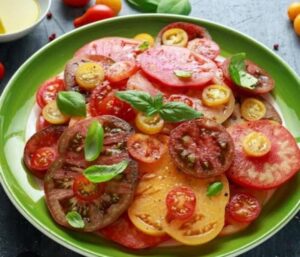
Try it simply with a little salt and freshly ground pepper.
For a classic tomato sandwich, place thick slices between good bread with a small amount of mayonnaise. The tomato itself should remain the star. Brandywine also works beautifully in salads where the fruit can be cut into large pieces rather than reduced to small cubes. Combine it with basil, olive oil, and a mild cheese for a simple summer dish.
Because the Brandywine tomatoes are exceptionally juicy, they are also useful for fresh sauces and rustic preparations where intense tomato flavor is more important than perfectly uniform texture. It is less appropriate when a recipe requires firm, uniform tomatoes that can tolerate extensive processing without breaking down.
Should You Grow in a Home Garden?
Brandywine tomatoes are not the obvious choice for gardeners who measure success purely by yield. It matures relatively late. The plants become large. The fruits can crack. Ripening can be uneven. Fruit set may suffer during unfavorable temperatures. The plant may produce fewer tomatoes than some modern cultivars.
Yet those disadvantages help explain why Brandywine tomatoes remain popular. Its purpose is different. Instead of maximizing the number of identical fruits, Brandywine tomatoes offer an opportunity to grow a tomato whose appeal lies in size, texture, history, and fresh-eating quality. It is particularly interesting for gardeners who enjoy observing how heirloom varieties behave under real garden conditions.
Saving Seeds
Saving seed from an open-pollinated heirloom can be a rewarding way to maintain a favorite line. If a particular Brandywine plant produces fruit with the characteristics you value, select a healthy, fully ripe tomato from that plant. Extract the seeds and clean away the surrounding pulp before allowing them to dry thoroughly. For fermentation-based seed cleaning, gardeners commonly allow the seed and surrounding tomato material to ferment briefly before rinsing and drying the seeds. The process helps separate seeds from the gelatinous material surrounding them. Once completely dry, store the seed in a cool, dry, dark environment.
Remember that saving seed does not necessarily guarantee that every future plant will be genetically identical to the parent if cross-pollination occurs. Brandywine tomatoes generally self-pollinate, but occasional crossing is possible. This is another reason to preserve seed from plants whose characteristics you have actually observed. For an heirloom such as Brandywine, seed saving is more than an economical gardening technique. It is part of the process through which traditional varieties have continued to exist outside large-scale commercial breeding programs.
Brandywine vs. Modern Hybrid Tomatoes
Comparing Brandywine tomatoes with a modern hybrid is not really a question of which tomato is universally better. They were developed or maintained with different priorities. Many modern commercial varieties emphasize characteristics such as uniformity, disease resistance, transportability, productivity, shelf life, and predictable maturity. Brandywine represents a different gardening philosophy. Its appeal is strongly associated with fresh eating quality, distinctive fruit characteristics, and historical continuity.
That difference becomes obvious at harvest. A modern tomato may produce a large number of consistent fruits that ripen within a relatively predictable window. A Brandywine plant may give you fewer tomatoes, but those tomatoes can be enormous, irregular, and intensely satisfying when eaten fresh. For many home gardeners, there is room for both. A garden does not have to choose between efficiency and tradition.
Conclusion
Brandywine tomatoes teach an interesting lesson about what gardeners value. Modern agriculture has become exceptionally good at producing food that is uniform, durable, predictable, and easy to transport. Those qualities matter. But home gardening allows us to choose characteristics that commercial production cannot always prioritize.
A tomato can be worth growing because it tastes exceptional even if it cracks.
Brandywine tomatoes can be worth saving because their history is fascinating, even if their yield is modest. And it can be worth planting simply because harvesting one enormous pink tomato from a plant you started from seed feels different from picking an anonymous tomato from a grocery-store shelf. Brandywine tomatoes are therefore more than a large pink heirloom. It represents a different way of evaluating a vegetable.
The potato-leaf foliage of Brandywine tomatoes makes them recognizable. Its large beefsteak fruits make it impressive. Its complicated history makes it intriguing. Its sensitivity to growing conditions makes it challenging. But its potential flavor is what keeps gardeners returning to it.
If you decide to grow Brandywine tomatoes, give them a long season, strong support, fertile and well-drained soil, consistent moisture, adequate sunlight, and patience. Most importantly, choose your seed source carefully so that you know which Brandywine you are actually growing.
Then wait.
When that first large pink fruit finally reaches the kitchen, slice it thick, add a little salt, and let the tomato speak for itself. That is where Brandywine tomatoes make their strongest argument for having a permanent place in the home garden.
Disclaimer
The content provided on this website is purely for educational purposes. We are neither nutritionists nor do we intend to mislead our readers by providing any medical or scientific information.