
Best Perennials for All-Year? 6 Major Considerations
Introduction
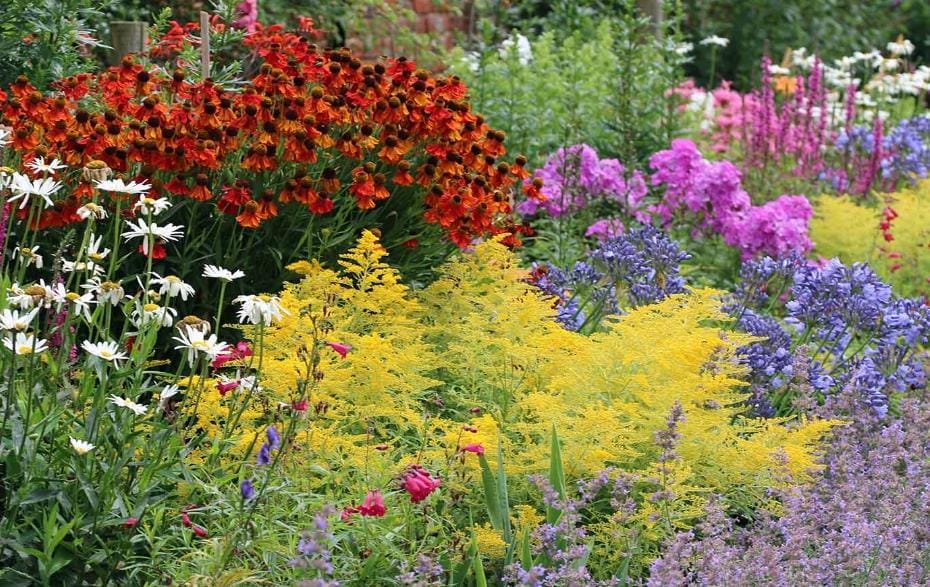
The most successful perennial garden uses seasonal succession, combining plants that flower at different times while also choosing varieties with attractive foliage, seed heads, stems, or evergreen structure. Imagine a garden that looks beautiful in spring but becomes tired by mid-summer; it is usually not short of plants—it is short of planning. The secret to an attractive yard throughout the year is not finding one magical perennial that flowers nonstop. No hardy perennials can provide uninterrupted blooms through every season in most climates. Sounds heart-wrenching to a gardener.
Seasonal succession can turn an ordinary border into a garden that changes character as the year progresses. Hellebores can provide color toward the end of winter, peonies and catmint take over in spring, coneflowers and bee balm carry the garden through summer, asters and sedums bring the strongest late-season display, and ornamental grasses or persistent seed heads keep the landscape interesting after frost.
When selecting plants, consider hardiness, sunlight, drainage, mature size, and flowering time—not just the color of the flowers at the nursery. The USDA Plant Hardiness Zone Map remains the standard reference for determining which perennial plants are likely to survive winter temperatures in a particular U.S. location. The current 2023 map is based on average annual extreme minimum temperatures from 1991–2020.
Here we will discuss some of the best perennials to build an all-year color scheme, and the major considerations a gardener should consider while revamping their garden.
1. Hellebores for Late-Winter and Early-Spring Color
When much of the yard is still dormant, hellebores can make the garden feel alive again. Depending on climate and species or hybrid, they can flower from late winter into early spring, making them valuable bridge plants between winter and the main growing season. Helleborus × hybridus types, often called Lenten roses, are particularly useful beneath deciduous trees or in partially shaded borders. Their flowers come in shades including white, pink, purple, maroon, and greenish tones. Technically, what appears to be the flower petals are actually colorful sepals, which remain attractive much longer than many delicate true petals.
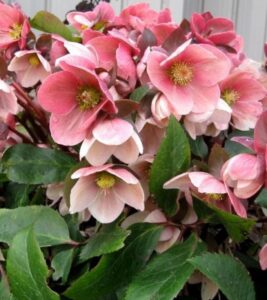
As perennials, hellebores are especially useful because they do not depend entirely on flowers for visual appeal. Their leathery foliage provides texture when other plants are just beginning to emerge. In suitable climates, foliage can remain attractive through part of winter. Illinois Extension notes that winter-blooming hellebores can produce flower buds surprisingly early, with some plants flowering during the winter season when conditions permit.
2. Coral Bells for Long-Lasting Foliage Color
If your definition of garden color includes foliage—and it should—coral bells deserve a prominent place as perennials. Heuchera species and hybrids are among the most versatile foliage perennials available. Depending on the cultivar, leaves can be lime green, gold, burgundy, purple, bronze, silver, peach, or variegated. This means you can create visual contrast even when nothing is flowering.
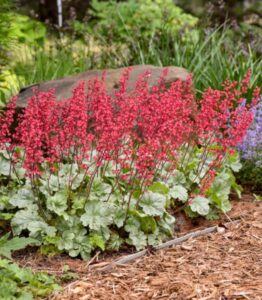
Coral bells also produce delicate flower stalks, usually above a compact mound of foliage. Their flowers are not the primary reason to grow them, but they add another layer of seasonal interest. Illinois Extension describes Heuchera as a particularly useful group in perennials family because of its wide range of leaf colors, sizes, and textures. Many varieties prefer light shade, although some newer hybrids tolerate considerably more sun.
3. Peonies for a Spectacular Spring Display
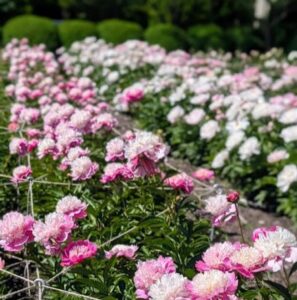
Few perennial flowers create the same sense of anticipation as peonies. Peonies generally bloom in late spring, but their value extends beyond their flowers. Their lush foliage remains attractive after flowering, helping the garden transition toward summer rather than suddenly becoming empty when the blooms disappear.
There is another advantage: gardeners can combine early-, mid-, and late-season peony cultivars to extend the flowering period. Illinois Extension notes that selecting cultivars from different bloom periods can stretch the peony season to roughly four to six weeks.
For an all-year garden, think of peonies as the major spring event rather than the plant responsible for carrying the garden through summer. Surround them with foliage plants and later-blooming perennials so the border never develops a visual hole after the peonies finish.
4. Baptisia for Late-Spring Color and Architectural Foliage
Blue false indigo, Baptisia australis, is an excellent choice for gardeners who want something substantial without relying on a shrub. Baptisia develops into large, rounded perennials with blue-green foliage and tall flower spikes in late spring or early summer. The blooms may last several weeks, and mature plants can produce numerous flower stems.
Its seasonal interest continues after flowering. The plant can develop dark seed pods that contrast with its foliage and can remain attractive into winter if the stems are left standing. Baptisia works especially well toward the middle or back of a perennial border. Its blue-green foliage also provides an effective contrast to plants with brighter green leaves.
5. Catmint for an Extended Summer-to-Fall Show
Catmint, particularly Nepeta × faassenii and related cultivars, is a strong candidate when you want perennials that can keep producing color rather than flowering for only a few weeks. Its gray-green foliage forms attractive mounds, while spikes of blue or lavender flowers create a cool color contrast against yellow, orange, pink, and red flowers nearby.
One of catmint’s most useful characteristics is its ability to rebloom after being cut back following the first flush of flowers. Illinois Extension identifies catmint as a full-sun perennial that can flower from spring into summer and notes that cutting it back after flowering helps maintain cleaner foliage. It is also drought-tolerant once established.
Pair it with upright perennials rather than planting it alone. Its mounding habit creates a visual transition between low edging plants and taller summer flowers.
6. Bee Balm for Summer Energy and Pollinators
Bee balm, Monarda didyma, provides one of the most energetic summer displays in perennials’ garden. Its tubular flowers are arranged in distinctive heads and can appear in vivid red, pink, purple, or other cultivated shades. Beyond the flowers, the plant’s architectural form helps give the summer garden a more layered appearance.
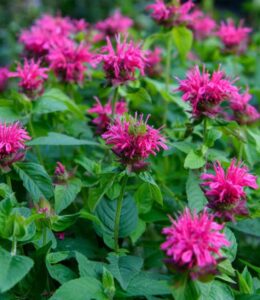
Bee balm is particularly valuable in a garden designed for wildlife because its flowers are highly attractive to pollinators, including bees and butterflies. It can also add vertical structure without becoming as visually heavy as some large flowering shrubs.
Instead of planting one isolated specimen, several plants grouped together can create a stronger visual effect while supporting a more coherent pollinator planting.
7. Purple Coneflower for Reliable Summer Color
Purple coneflower, Echinacea purpurea, is one of the most dependable choices for the center of an all-season perennial border. Its daisy-like flowers begin appearing in summer, and the plant can remain attractive for an extended period. Mature plants generally reach around 2 to 4 feet in height, making them useful for the middle of a mixed border.
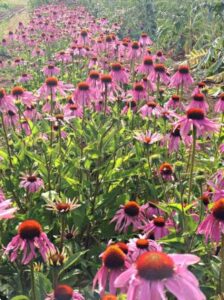
Coneflower also illustrates why an all-year garden should not be judged only by its flowers. Illinois Extension describes purple coneflower as a long-lived perennial that tolerates heat and drought once established and notes that its seed heads attract birds. Recent Extension research also highlights its long flowering period and importance to a wide range of pollinators.
8. Sedum for the Late-Summer Transition
As many traditional summer perennials begin to slow down, upright sedums can become the stars. Modern classifications place the familiar “Autumn Joy” types in the genus Hylotelephium, but gardeners still commonly call them sedums. Their succulent foliage handles sun well, and their dense flower clusters begin to form toward the end of summer. The flower heads often open pink and gradually become deeper rose, copper, bronze, or reddish tones as the season progresses. This gradual transformation is one reason they work so well in an all-season border.

Illinois Extension reports that upright sedums become particularly valuable in fall and that cultivars such as ‘Autumn Joy’, ‘Matrona’, and others provide changing foliage and flower colors as the season advances.
9. Asters for the Garden’s Autumn Finale
A garden that has plenty of summer flowers but little happening in September and October can feel unfinished. That is where asters become essential. New England aster, Symphyotrichum novae-angliae, and aromatic aster, Symphyotrichum oblongifolium, are two useful choices. Their daisy-like flowers can appear in purple, pink, blue, or white and provide a strong late-season contrast.
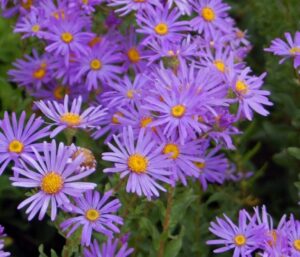
Asters have an ecological advantage too. Late-season flowers provide nectar when many earlier-flowering species have already finished. Researchers from the University of Florida describe asters as late-blooming, pollinator-friendly perennials and notes that their flowering is triggered as day length decreases toward late summer and early fall.
10. Goldenrod for Bright Autumn Contrast
Goldenrod, particularly well-behaved ornamental or native selections, is another excellent late-season perennial. Its yellow flowers can create a dramatic contrast when planted alongside purple asters. The combination is more effective than either color by itself because the two colors sit opposite each other on the traditional color wheel.
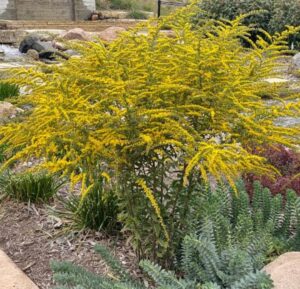
Goldenrod also deserves a better reputation than it sometimes receives. It is frequently blamed for seasonal hay fever, but ragweed is a much more important source of airborne pollen associated with fall allergies. National Wildlife Federation identifies goldenrod as an important fall resource for pollinators and notes that some species and selections can support numerous butterfly and moth species.
11. Ornamental Grasses for Fall and Winter Color
A garden does not need flowers to remain colorful. Ornamental grasses are among the best plants for extending visual interest after frost because their foliage and seed heads can remain upright when many flowering perennials have gone dormant. Little bluestem, Schizachyrium scoparium, is a particularly useful native option. Its foliage can begin blue-green and develop reddish or purplish tones later in the season. The seed heads remain attractive after flowering, and the plant’s dried stems add winter texture.
According to the Morton Arboretum in perennials, little bluestem generally reaches about 2 to 4 feet and combines seasonal foliage color with persistent seed heads. For taller gardens, switchgrass and big bluestem can provide vertical structure. Feather reed grass is another popular option; its upright stems and long-lasting seed heads can remain attractive into late winter.
In other words, ornamental grasses can take over the job of “flowering plants” when flowers are no longer available.
Think in Layers, Not Isolated Plants
A professional-looking perennial border usually has several visual layers. Low plants should occupy the front edge. Medium-height perennials belong in the center, while taller species and grasses create a backdrop.
For example, catmint can form the front layer, coral bells can add colorful foliage slightly behind it, coneflowers can provide summer height, and an ornamental grass can remain behind everything during winter. The result is not simply a collection of plants. It is a succession of textures and heights.
Match Plants to Your Yard Before Matching Them to Your Favorite Color
A beautiful plant is not necessarily the right plant. Before buying any perennials, determine whether the intended site receives full sun, partial shade, or deep shade. Check drainage as well. A plant adapted to dry, well-drained soil will not necessarily thrive in a consistently wet bed, and a shade-loving perennial can struggle when exposed to intense afternoon sunlight.
Hardiness is equally important. USDA zones help estimate whether a perennial can survive typical winter minimum temperatures, but they do not describe every aspect of a garden’s climate. Soil, moisture, summer heat, exposure, wind, snow cover, and local microclimates also influence performance.
This is why “zone appropriate” should be treated as a starting point rather than a guarantee.
Don’t Cut Everything Down in Fall
One of the easiest ways to destroy winter interest is to clean the garden too aggressively. Not all perennials need to be cut back immediately after frost. Coneflower seed heads, ornamental grass plumes, and other dried stems can create texture while also providing resources for birds and overwintering wildlife.
Illinois Extension recommends leaving selected stems and seed heads standing, particularly on plants such as coneflowers and ornamental grasses. Dry stems can provide winter habitat, while seed heads can serve as food for birds.
There is one important exception: diseased plant material should be removed appropriately rather than left in place simply for appearance.
A Simple All-Year Perennial Combination
For a sunny border, a strong sequence could be:
Spring: Peony + Baptisia + Coral bells
Early summer: Catmint + bee balm
Mid-summer: Purple coneflower + bee balm
Late summer: Sedum begins changing color
Fall: Asters + goldenrod + sedum
Winter: Ornamental grass + coneflower seed heads + persistent foliage
For a partly shaded garden, shift the emphasis toward:
Late winter/early spring: Hellebores
Spring: Coral bells + other shade-tolerant perennials
Summer: Heuchera foliage + shade-adapted flowering perennials
Fall: Late-season asters where light allows
Winter: Christmas fern + persistent stems and foliage
These combinations illustrate the principle without requiring every garden to contain the same plants.
Create Color Through Foliage, Not Just Flowers
Gardeners often think of color as red, yellow, pink, blue, or purple petals. Foliage dramatically expands the palette. Bronze Heuchera can make pale flowers look brighter. Blue-green Baptisia can calm a border filled with hot colors. The gray-green foliage of catmint can connect purple flowers to silver-foliaged plants. Little bluestem can introduce copper and bronze tones when many flowers have disappeared.
This is particularly important from midsummer onward because foliage often remains attractive after individual flowers fade.
Give Wildlife a Seat at the Design Table
An all-year garden can do more than improve the appearance of the yard. When you select flowering periods deliberately, you can provide nectar and pollen across a longer portion of the growing season. Native perennials can be especially valuable because they have evolved in association with local ecosystems. Purple coneflower, asters, goldenrod, Baptisia, and other native plants can support pollinators and, in some cases, provide food or habitat for other wildlife.
Avoid assuming that every ornamental cultivar offers the same ecological benefit as its species. Breeding for unusual flower shapes, extra petals, or highly modified forms can sometimes change how accessible pollen and nectar are to insects. The University of Illinois Extension’s recent discussion of coneflower cultivars is a useful example of why appearance and ecological function are not always identical.
The Best Perennials Garden Is One That Changes
The greatest strength of perennial gardening is not that plants return every year. It is that the garden can change every month while remaining rooted in the same design.
Hellebores signal the end of winter. Peonies, as perennials, announce spring. Catmint, bee balm, and coneflowers take over summer. Sedums, asters, and goldenrods keep autumn lively. Grasses, seed heads, and evergreen foliage carry the structure through winter.
That is the real formula for all-year color: do not ask one plant to perform every job.
Instead, choose a collection of perennials with different flowering periods, foliage colors, heights, textures, and winter characteristics. Match them carefully to their growing conditions, leave selected seed heads standing, and allow each season to hand the garden over to the next.
When planned this way, your yard does not reach a single peak and then fade away. It keeps changing—and that may be the most beautiful kind of garden color of all, and its all because of lovely perennials.
Happy Gardening!!!
Disclaimer
The content provided on this website is purely for educational purposes. We are neither nutritionists nor do we intend to mislead our readers by providing any medical or scientific information.
