Permaculture Gardening: 9 Essential Questions to Begin With
Introduction
Permaculture gardening is better understood as a method of creating a garden as an interconnected system, even if it is sometimes presented as a collection of gardening practices. Instead of addressing the vegetable bed, compost pile, fruit trees, pollinator plants, soil, water, and animals as separate undertakings, permaculture examines how they may support one another. Imagine a garden where fallen leaves are not waste, rainwater is treated as a resource rather than something to drain away, flowering plants have a purpose beyond decoration, and the soil becomes more productive instead of being exhausted year after year. That is the basic idea behind permaculture gardening.
Designing productive human environments around natural patterns is an idea that dates back to the 1970s. Observing nature, appreciating diversity, cutting waste, combining components, utilizing renewable resources, and adapting to change are some of its tenets.
Crucially, not all of the claims stated about permaculture gardening have been proven by science. Research particularly testing entire permaculture gardening systems is still relatively sparse. However, several strategies typically incorporated into permaculture—such as agroforestry, soil cover, crop diversity, habitat building, composting, water saving, and perennial planting—have strong scientific support. Higher soil carbon, lower soil bulk density, more earthworms, and significantly more plant and bird diversity were found on nine permaculture gardening in farms compared to adjacent conventional fields in a 2024 study. However, the researchers also noted that the overall body of evidence is still small.
That distinction is important. Permaculture gardening technique isn’t a miracle. It is a framework for designing gardens that can incorporate a variety of ecological activities backed by research.
What Is Permaculture Gardening?
Permaculture gardening is, at its most basic, the design of a garden so that its various elements support one another and serve several beneficial purposes. A traditional garden might feature a vegetable bed, lawn, compost bin, fruit tree, rain barrel, and flower border. Each can be handled separately. The same area is viewed differently in a permaculture garden.
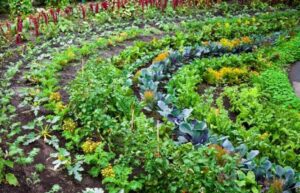
Both food and plant waste are produced in the vegetable garden. These leftovers can be turned into mulch or compost. Pollinators and predatory insects are drawn to flowering plants. Fruit, shade, habitat, and biomass can all be obtained from trees. Soil is shielded by groundcovers. Instead of letting rainwater flow off, it can be channeled toward plants. Returning organic materials to the soil enhances its physical state and nourishes soil organisms.
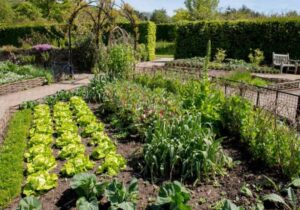
The goal isn’t just to cultivate as many plants as possible. Its goal is to establish beneficial partnerships among plants, animals, soil, water, people, and structures. This is why a permaculture garden may appear very different from a perfectly symmetrical vegetable garden. It could include vegetables combined with herbs, perennial plants, shrubs, fruit trees, groundcovers, blooming plants, walkways, composting areas, and habitat features.
The design may be formal or informal. What is important is how the components work together.
Start With Observation, Not Planting
One of the most important permaculture gardening principles is surprisingly simple: observe before intervening. Spend some time watching the land before making a decision on where to place a raised bed.
- Where does sunlight remain longest?
- Which areas stay wet after rain?
- Where does water naturally flow?
- Which parts of the garden dry out first?
- Where does snow accumulate?
- Which areas receive morning sun but afternoon shade?
- Where are the strongest winds coming from?
- Where do weeds appear repeatedly?
- Where do beneficial insects already gather?
These observations reveal information that a generic garden plan cannot provide. For example, a vegetable that needs full sun may struggle if planted near a tree that provides midday shadow. Conversely, that same shady position could be useful for crops that can endure low light.
Water movement demands special attention. Rainfall on sloping ground can travel quickly downhill, bringing soil particles and nutrients with it. Vegetative buffers and agroforestry systems can reduce runoff and protect soil and water. According to USDA studies, these systems can help reduce erosion, improve infiltration, moderate microclimates, and provide habitat.
Observation becomes the first tool in the permaculture gardener’s toolbox.
Think in Connections Rather Than Isolated Features
Is permaculture gardening profitable? Well, it is based on connections. Consider the fruit tree. In a traditional design, it could just be a fruit-producing plant. In a systems-based design, a single tree might supply fruit for humans, flowers for insects, habitat for birds, shade for shade-tolerant plants, leaf litter for soil organisms, branches for woody mulch, and wind protection. This does not imply that every tree must serve all of these roles. Instead, it prompts the gardener to ask:
“How many useful jobs can this element perform?”
The same logic applies to other garden elements.
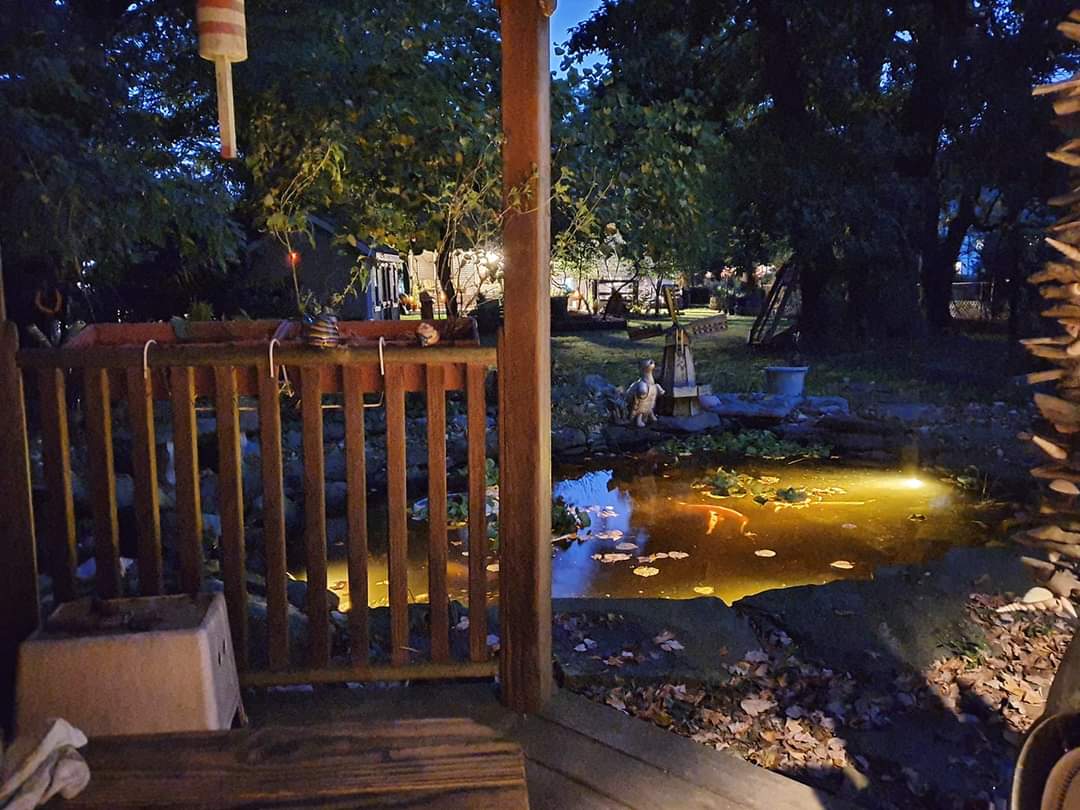
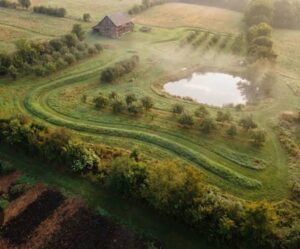
A pond can store water while also promoting aquatic life and habitat diversity. A hedge can serve as a barrier while minimizing wind exposure and offering flowers, berries, or shelter. A composting area can digest organic waste while providing soil amendment. This method can make a tiny garden surprisingly productive without requiring additional land.
Build the Soil as a Living System
Healthy soil is central to permaculture gardening because plants depend on much more than the mineral particles beneath their roots. Soil contains bacteria, fungi, earthworms, arthropods, plant roots, organic matter, water, air, and mineral components. Their interactions influence nutrient cycling, structure, water movement, and plant growth. Instead of treating soil primarily as a medium that needs increasingly large quantities of fertilizer, permaculture gardening encourages gardeners to maintain the biological and physical conditions that allow soil to function effectively.
One important strategy is keeping soil covered. Bare soil is exposed to rainfall impact, wind erosion, temperature fluctuations, evaporation, and biological disturbance. Living plants, crop residues, and appropriate mulches provide physical protection. Conservation agriculture similarly emphasizes three broad principles: minimizing soil disturbance, maintaining soil cover, and increasing crop diversity.
For the home gardener, this does not mean abandoning every form of cultivation. It means becoming more selective about when digging is actually necessary. If a bed can be prepared without repeatedly disturbing the entire soil profile, there may be little reason to turn it over simply because that is how gardens have traditionally been prepared.
Compost Is a Resource, not a Magic Ingredient in permaculture gardening.
Compost Is a Resource, not a Magic Ingredient
Permaculture gardening often places composting near the center of the garden system. Kitchen scraps, leaves, grass clippings, and suitable plant residues can be transformed into a stable organic material that can be returned to the soil. But compost should not be viewed as a universal cure for every soil problem. A garden with compacted clay soil, for example, has a different challenge from a sandy soil with extremely low water-holding capacity. Compost can contribute organic matter, but soil management should begin with understanding the existing conditions.
The larger permaculture gardening lesson is the cycling of resources.
A plant grows using sunlight, water, carbon dioxide, nutrients, and minerals. When leaves or stems fall, those materials do not necessarily need to leave the property. They can become part of the garden’s next stage in the nutrient cycle. That creates a useful shift in thinking:
Instead of asking, “How do I get rid of this?” ask, “Does this material have any other useful function here?”
Use Diversity Without Creating Chaos
Biodiversity is one of the most recognizable features of permaculture gardening. A diverse garden can include vegetables, herbs, flowers, shrubs, trees, groundcovers, and habitat plants rather than relying on a single crop across a large area. There are several reasons why this matters.
Different plants have different root structures, nutrient demands, flowering periods, heights, and responses to environmental conditions. Diversity can therefore create a more complex habitat and distribute ecological functions throughout the garden. Research on farms adopting permaculture gardening has found substantial differences in biodiversity compared with paired conventional fields, including greater richness of vascular plants, earthworms, and birds.
But diversity does not mean randomly mixing every plant. Plant combinations should still respect spacing, light requirements, mature size, water needs, and disease susceptibility. A sprawling squash plant may overwhelm a small herb. A vigorous perennial may compete with nearby vegetables. A tree can eventually shade an area that was once suitable for sun-loving crops.
The best combinations in permaculture gardening are therefore designed rather than accidental.
Create a Garden That Feeds More Than People
In a permaculture gardening concept, the garden can produce food while also supporting insects, birds, and other organisms. Flowers provide nectar and pollen. Dense vegetation creates shelter. Seed-producing plants can support birds. Some plants provide host resources required by particular insects. This is particularly important because not every insect visiting your garden is a pest. A garden with flowering plants throughout the growing season can provide resources for pollinators and predatory insects. Those predators may include organisms that feed on aphids, caterpillars, mites, and other herbivorous pests.
The objective is not to eliminate insects. It is to create conditions where the garden contains a wider ecological community, rather than relying exclusively on intervention whenever an insect appears. That distinction can make pest management more preventive and less reactive.
Combine Annuals with Perennials
Annual vegetables are excellent for producing food quickly, but a garden built entirely around annual crops requires repeated soil preparation, sowing, transplanting, and harvesting. Perennial plants introduce another dimension. Fruit trees, berry shrubs, perennial herbs, asparagus, rhubarb, and many ornamental species can remain in place for years.
Instead of using only the horizontal surface of a garden, the gardener can think in layers:

- Canopy trees
- Smaller trees
- Shrubs
- Herbaceous plants
- Groundcovers
- Roots and bulbs
- Climbers
This layered approach resembles the structural complexity found in natural plant communities. Agroforestry research supports the usefulness of integrating trees and shrubs with crops. USDA describes agroforestry as a system capable of combining food production with soil and water protection, habitat creation, microclimate modification, and landscape diversity.
For a small home garden, however, restraint is important. A mature tree can have a very large root and canopy footprint. Plan for the tree you will have in 10 or 20 years—not the small plant you purchase yesterday.
Design Water to Stay Where Plants Can Use It
Water management is another major part of permaculture gardening. Rather than treating rain as something that should immediately disappear through drains, gardeners can sometimes slow and redirect water so that more of it enters the soil.
Simple strategies include:
- Maintaining healthy soil structure
- Keeping soil covered
- Planting vegetation where runoff occurs
- Using swales where appropriate
- Directing downspouts toward suitable planting areas
- Collecting rainwater where regulations and conditions permit
- Grouping plants according to water requirements
The correct strategy depends heavily on the property. A swale that makes sense on a suitable slope may be unnecessary—or even inappropriate—on a small, flat suburban lot. Water harvesting should therefore begin with understanding drainage patterns rather than copying an internet design.
In other words, water management is really landscaping management.
Make Waste Part of the Design
Permaculture gardening’s emphasis on reducing waste is particularly practical in a home garden. Leaves can become mulch or compost. Small branches can become woody material. Grass clippings can be used appropriately as mulch. Vegetable scraps can enter a composting system. Seeds can be collected from suitable plants. Healthy plant residues can return nutrients and carbon to the soil.
Even weeds can sometimes become useful biomass after being removed before they set seed, provided the species and disposal method make this safe. The important principle is not “never throw anything away.”
It is important to recognize that materials often have more than one possible use.
Use Small and Slow Solutions
One of the most misunderstood aspects of permaculture gardening is the temptation to transform the entire property immediately. That can create enormous amounts of work. Instead, begin with a small system. Convert one lawn section into a productive bed. Plant one fruit tree in the correct location. Create one pollinator border. Improve one compacted area. Start a composting system.
Observe the results. Then expand. This approach is valuable because gardens change slowly. A newly planted shrub does not immediately behave like a mature shrub. Soil organic matter does not transform overnight. Trees develop over years. A design that looks impressive during its first month may become difficult to manage after five years. A smaller system gives you time to learn what works on your property.
Design for Climate, Not Against It
A resilient garden should work with its local climate rather than constantly fighting it. Plant selection is therefore critical. Choose species suited to the site’s winter temperatures, summer heat, rainfall pattern, soil conditions, and available sunlight. Microclimates can also be used intelligently. A south-facing wall may create warmer conditions than an exposed section of lawn. A dense hedge can reduce wind exposure. A tree can eventually create shade that benefits certain plants during hot weather.
However, microclimates can also introduce problems. Poorly ventilated areas may retain humidity and increase disease pressure. Dense planting can create competition for water and nutrients. The goal is not maximum density. It is appropriate density.
Don’t Confuse Permaculture Gardening With “No Maintenance”
A common misconception is that permaculture gardening means creating a garden that takes care of itself. Natural ecosystems may appear effortless, but they are not maintenance-free. Plants compete, die, regenerate, spread, and respond to disturbances. A home garden has additional requirements because humans want particular plants, harvest specific foods, maintain paths, and control certain species.
A productive permaculture garden still requires pruning, harvesting, mulching, watering when necessary, monitoring pests, managing diseases, removing aggressive plants, and periodically redesigning parts of the system. The difference is that the gardener tries to reduce unnecessary work by designing better relationships.
A perennial herb planted near the kitchen may reduce repeated trips across the garden. A mulch layer can reduce surface evaporation and suppress some weeds. A well-designed windbreak can reduce exposure. A diverse planting can provide habitat. Good design does not eliminate work. It makes the work more purposeful.
Food Forests: One Permaculture Model
The food forest is perhaps the most recognizable permaculture-inspired gardening design. It uses multiple vegetation layers to imitate some of the structure of a woodland while replacing many wild species with plants useful to people. A simplified food forest might include a fruit tree, berry shrubs, perennial herbs, groundcovers, bulbs, and climbing plants. But a food forest should not be treated as a universal solution.
Large trees may be inappropriate for a tiny yard. Shade can eventually reduce vegetable production. Root competition can increase. Harvesting can become difficult if plants are allowed to become excessively dense. A food forest succeeds when its species are selected for the actual site and managed according to their mature dimensions.
The underlying idea—combining perennial plants and multiple ecological functions—has connections with the broader scientific field of agroforestry. USDA research recognizes systems such as alley cropping, forest farming, windbreaks, and riparian buffers as established forms of agroforestry.
Permaculture Gardening and Soil Carbon
One reason permaculture has attracted scientific attention is its potential influence on soil carbon. Plants remove carbon dioxide from the atmosphere through photosynthesis. Some of the carbon becomes plant tissue; some eventually enters the soil through roots, residues, and other biological pathways. Perennial vegetation, continuous soil cover, and reduced disturbance can influence these carbon flows.
A 2024 study of nine European permaculture farms reported 27% greater soil carbon stocks compared with paired control fields. The study also found lower bulk density and higher earthworm abundance on the permaculture sites. These results are interesting, but they should not be interpreted as proof that every permaculture garden will increase soil carbon by the same amount.
Permaculture Gardening Can Be Surprisingly Simple
You do not need a large property to begin. A small suburban garden could incorporate permaculture principles through a few carefully chosen changes. Keep the soil covered. Compost suitable organic materials. Grow a mixture of annual and perennial plants. Include flowering plants that provide resources for beneficial insects. Plant species according to sunlight and water requirements. Use rainwater thoughtfully.
Keep useful plant residues within the garden where appropriate. Add a fruit tree or berry shrub if space allows. Observe the garden before making major changes. Most importantly, connect the pieces. A vegetable bed beside a compost system is more useful than the same two features placed without considering how materials move between them.
A rain garden positioned where runoff naturally accumulates makes more sense than one installed simply because rain gardens are fashionable. A fruit tree selected for the available space and climate is more valuable than a tree chosen solely because it appears in a permaculture design.
Common Permaculture Gardening Mistakes to Avoid
- Permaculture gardening becomes less effective when its principles are followed mechanically. Planting too densely can increase competition and reduce airflow
- Adding too many species can make harvesting and maintenance unnecessarily complicated
- Installing swales without understanding drainage can create water-management problems rather than solving them
- Planting large trees too close to buildings ignores their mature size
- Assuming every organic material belongs in compost can introduce weeds, diseases, or contaminants
- Avoiding all intervention can allow invasive plants, pests, or diseases to spread
- Assuming that natural means automatically beneficial can also lead to poor plant choices
- Nature contains both useful relationships and intense competition
The gardener’s role is not to recreate untouched wilderness. It is to design a productive human landscape that uses ecological processes intelligently.
How to Start Permaculture Gardening from Scratch
If you want to begin, resist the urge to redesign everything in one weekend. Start by mapping your property. Mark sunlight, shade, slopes, drainage, existing trees, structures, prevailing winds, water sources, and already productive areas.
Next, identify what you actually want from the garden.
- Do you want vegetables?
- Fruit?
- Herbs?
- Pollinator habitat?
- A quieter outdoor space?
- Lower maintenance?
- More privacy?
Food production should influence the design, but it does not have to be the only goal. Then identify the existing resources. Leaves, rainwater, plant residues, sunlight, existing trees, and available organic materials can all become part of the system. Begin with one manageable area. Improve its soil. Choose plants suited to its conditions. Add supporting species. Observe what happens. Only then expand. This process turns permaculture gardening from an abstract philosophy into a practical design method.
Conclusion
Permaculture gardening is sometimes described as “working with nature,” but that phrase becomes meaningful only when translated into practical decisions. It means recognizing that soil is alive. It means understanding that water moves through landscapes. It means choosing plants according to their ecological roles rather than appearance alone. It means recognizing that biodiversity can be an asset. It means seeing fallen leaves as potential resources. It means designing relationships between garden elements.
The scientific evidence does not justify claiming that every permaculture gardening technique is justified in every situation. In fact, researchers studying permaculture have pointed out that direct evidence remains relatively limited. But many of the practices commonly brought together under the permaculture umbrella have strong scientific foundations. Agroforestry can support soil and water conservation and habitat; diverse vegetation can increase ecological complexity; soil cover protects the soil surface; perennial plants can create long-term vegetation structure; and organic matter management can contribute to soil quality.
That makes permaculture gardening especially interesting for home gardeners. You do not have to follow a rigid set of rules. You can take the underlying idea—design the garden as a connected system—and apply it according to your climate, soil, space, resources, and goals. The result does not have to look like a forest, a farm, or a textbook illustration. It simply needs to function better. And perhaps that is the most useful way to think about permaculture gardening: not as a method for making a garden look natural, but as a method for making the relationships within a garden more intelligent, productive, and resilient.
Disclaimer
The content provided on this website is purely for educational purposes. We are neither nutritionists nor do we intend to mislead our readers by providing any medical or scientific information.