Sedge or Persistent Weed? 5 Exclusive Tips to Find
Introduction
Sedge is often mistaken for ordinary grasses because its narrow leaves, upright growth, and green appearance are remarkably similar. However, they belong to a different botanical family and possess distinctive characteristics that influence how they grow, spread, and respond to weed-control methods.
A healthy garden can quickly become frustrating when an unfamiliar grass-like plant begins appearing in lawns, flower beds, vegetable patches, or between paving stones. You pull it out, tidy the area, and assume the problem is solved. A few days or weeks later, however, the same plant appears again, sometimes in greater numbers. If this sounds familiar, you may be dealing with sedge, one of the more persistent groups of weeds encountered by home gardeners.
Some sedges are harmless native plants that provide valuable ecological benefits, while others can become aggressive competitors in cultivated gardens. Among the most troublesome are yellow nutsedge (Cyperus esculentus) and purple nutsedge (Cyperus rotundus). These species can spread through underground structures, compete with desirable plants for resources, and return even after repeated attempts at removal.
Understanding what makes sedges different is the first step toward controlling them. Rather than treating every grass-like weed in the same way, gardeners need to recognize its botanical identity, understand its growth cycle, and select management techniques that address the source of the infestation.
This blog explores sedge identification, common species, its effects on garden plants, reasons for its persistence, and practical, scientifically supported ways to manage it in home landscapes.
What Is Sedge? Understanding the Weed Behind the Name
Sedge is the common name for plants belonging to the family Cyperaceae. This large botanical family contains thousands of species distributed across different environments, including wetlands, grasslands, forests, agricultural fields, and coastal habitats.
Although many of them grow naturally without causing problems, certain species become troublesome when they establish themselves in lawns, vegetable gardens, ornamental beds, and agricultural fields. Their ability to compete with cultivated plants and reproduce through underground structures makes some members of this family particularly challenging to manage.
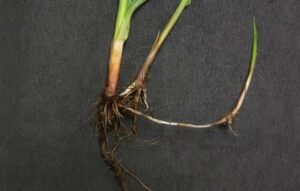
The term “nutsedge” is commonly used to refer to two especially persistent weeds: yellow nutsedge and purple nutsedge. Both are perennial plants, meaning they can survive for multiple growing seasons. Their underground reproductive structures allow them to return even when their visible leaves and stems have been removed.
Unlike broadleaf weeds such as dandelions or grassy weeds such as crabgrass, they have their own botanical characteristics. This distinction matters because control methods that work well against grasses or broadleaf plants may have little effect on established nutsedge.
These are also not universally undesirable. Many native species support wildlife, stabilize soil, and contribute to healthy ecosystems. The objective of weed management should therefore be to identify and control troublesome species rather than eliminate every sedge growing in the landscape.
How to Identify It in Your Garden
Recognizing sedge early can prevent a small infestation from developing into a widespread problem. Its resemblance to grass often causes gardeners to overlook it until the plants become noticeably taller or begin forming dense patches.
Fortunately, several physical characteristics make sedges relatively easy to distinguish once you know what to examine.
1. The triangular stem test
One of the most reliable identification methods is to examine the stem. Stems are generally solid and triangular in cross-section, while typical grass stems are usually round or hollow, although some grasses have solid stems. If you gently roll the lower stem between your fingers, you may notice its three-sided structure. This is the reason behind the familiar botanical saying, “Sedges have edges.”
2. Leaves arranged in three directions
Their leaves commonly emerge in three distinct rows around the stem. Grass leaves generally grow in two opposite rows. This difference becomes easier to recognize when examining the plant from above or looking closely at its base.
3. Leaf texture and appearance
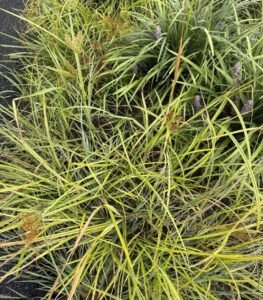
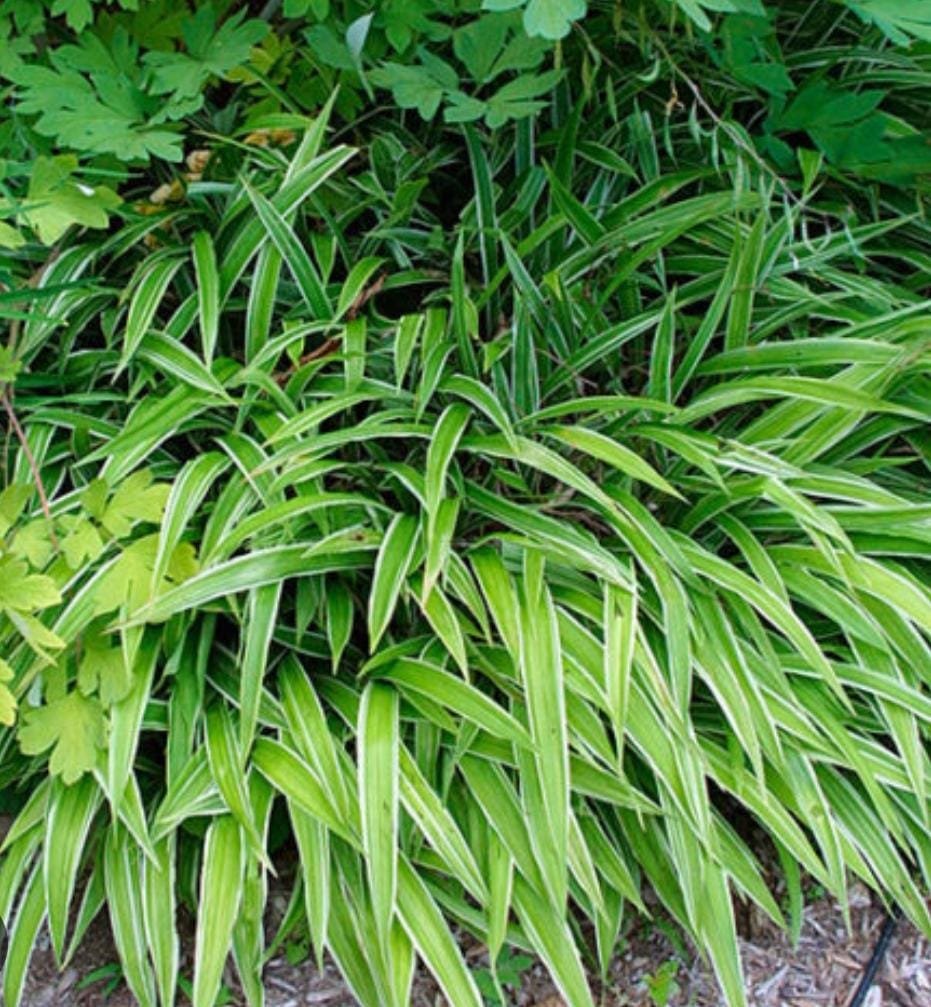
Nutsedge leaves are usually relatively stiff, glossy, and narrow. Depending on the species, their color can range from bright yellow green to deep green. They often grow more upright than surrounding lawn grasses, making infested areas appear uneven. In a closely maintained lawn, nutsedge may stand noticeably above the turf even when mowing has been performed recently.
4. Flowering structures
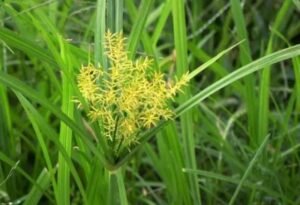
This weed produces flower clusters called inflorescences, which can be useful for identifying individual species. Yellow nutsedge generally produces yellowish, golden, or brownish flower clusters, while purple nutsedge develops reddish-purple to dark brown clusters. These structures usually appear on taller stalks and become easier to observe when the plants are not regularly cut.
According to university extension identification guides, the triangular stem, three-ranked leaves, and underground growth structures are among the most useful characteristics for distinguishing sedges from grasses.
Common Species That Become Garden Weeds
Not every plant behaves in the same way. Some reproduce mainly through seeds, while others spread aggressively through underground stems and storage structures. Understanding the species present in your garden helps determine the most appropriate management strategy.
1. Yellow nutsedge (Cyperus esculentus)
This is one of the most recognizable and widely distributed troublesome sedges. It is found in lawns, agricultural fields, vegetable gardens, and ornamental landscapes across many temperate and tropical regions. Its foliage is typically light green or yellow green, with long, narrow leaves that taper into sharp points. The plant can grow taller than surrounding turf, particularly during warm weather when lawn grasses are growing more slowly.
They spread through underground rhizomes, which are horizontal stems that grow beneath the soil surface. These rhizomes produce small, rounded underground tubers commonly called nutlets. A mature tuber can remain dormant until environmental conditions become favorable. When it sprouts, it produces a new shoot that eventually develops into another plant.
Interestingly, the yellow one is not always considered a useless plant. Its tubers are edible and are cultivated in some regions for food and beverages. In parts of the world, the plant is grown as a crop known as chufa or tiger nut. However, when it appears unexpectedly in cultivated garden beds, its reproductive ability can make it an unwanted competitor.
2. Purple nutsedge (Cyperus rotundus)
This type is often regarded as one of the world’s most troublesome agricultural weeds. It occurs in warm climates and is particularly problematic in tropical and subtropical regions. Its leaves are generally darker green and somewhat narrower than those of yellow nutsedge. The flower clusters are reddish-purple to dark brown, giving the species its common name.
Its underground growth system is particularly effective at spreading. It develops rhizomes that produce tubers in connected chains rather than producing individual tubers only at the ends of rhizomes, as yellow nutsedge generally does. These interconnected underground structures make physical removal difficult. A small piece of the underground system containing a viable tuber may be sufficient to establish new growth.
As per studies this is especially troublesome in vegetable production, irrigated gardens, and cultivated fields in warm regions. Its persistence means that removing visible shoots alone rarely provides lasting control. CALS+1
Annuals and other related weeds
Not all troublesome are perennial nutsedges. Several annual species, including small flower umbrella sedge (Cyperus difformis), can emerge in disturbed or consistently moist soil. Annual sedges generally reproduce through seeds rather than producing the extensive tuber networks associated with yellow and purple nutsedge. Another plant worth recognizing is green kyllinga (Kyllinga brevifolia). It resembles nutsedge but produces distinctive compact flower heads and spreads through rhizomes without forming the characteristic nutsedge tubers.
Correct identification is important because the management approach for a seed-producing annual sedge may differ considerably from the strategy required for a perennial nutsedge.
Why Is It Such a Persistent Weed?
If you have ever removed a plant only to see it reappear, you have experienced the main challenge associated with nutsedge: its underground reproductive system. Unlike many annual weeds that depend primarily on seeds, perennial nutsedges have developed an effective underground survival strategy.
1. Underground tubers store energy
Tubers are small, swollen underground structures that store carbohydrates and other resources. These reserves support new shoots when the plant begins growing again. Even after the aboveground foliage has been removed, viable tubers may remain in the soil. When conditions become favorable, they can produce fresh growth without depending on new seed germination.
2. Rhizomes create new plants
Rhizomes are horizontal underground stems that extend away from the parent plant. They develop buds that can produce new shoots and, depending on the species, additional tubers. This allows an infestation to spread outward from its original location. What begins as one isolated plant can eventually become a larger patch connected by underground growth.
3. Dormancy extends the problem
Some tubers do not sprout immediately. They remain dormant and may survive in the soil for extended periods. Studies report that nutsedge tubers can survive for several years, depending on species and environmental conditions. This is why one successful removal session does not necessarily eliminate an infestation.
4. Rapid growth during favorable weather
Nutsedge often grows vigorously during warm weather. It can emerge and develop quickly, particularly when soil moisture and temperatures are suitable. In regions with long, warm growing seasons, this provides a substantial opportunity for the plant to produce new shoots and underground reproductive structures.
5. Regrowth after mowing
Mowing removes leaves and flowering stalks but usually leaves the underground tubers and rhizomes untouched. Consequently, the plant can quickly replace its foliage. Repeated mowing may reduce flowering and seed production, but it should not be considered a dependable stand-alone solution for established perennial nutsedge.
What Conditions Encourage the Growth?
Although nutsedge can survive in different soil conditions, certain environmental factors encourage its establishment and spread.
Excessive Soil Moisture
Many infestations are associated with wet or poorly drained areas. Yellow nutsedge, in particular, commonly appears in waterlogged lawns, garden beds, and locations receiving excessive irrigation. Standing water is not always necessary. Soil that remains consistently damp can provide suitable conditions for establishment.
However, it is important to understand that nutsedge is not restricted to wet ground. Once established, it can tolerate a wider range of moisture conditions.
Warm Soil Temperatures
Warm soil encourages the emergence and development of many nutsedge species. Purple nutsedge is particularly well adapted to warm climates, while yellow nutsedge also grows actively during the warmer part of the growing season. This makes both species relevant to gardeners in regions where summers are long and temperatures remain high.
Disturbed Soil
Digging, cultivating, and moving soil can unintentionally distribute underground tubers and rhizomes. For example, a gardener who cultivates an infested vegetable bed may break underground structures into smaller pieces and move them to previously unaffected areas.
Open spaces and weak plant competition
Bare soil offers little resistance to weed establishment. When garden plants are spaced too far apart, or when lawn turf becomes thin, weeds have more opportunities to capture sunlight and available resources. A dense, healthy planting does not guarantee that sedges will disappear, but it can reduce the space and resources available for new growth.
How Weed Affects Your Lawn and Vegetable Garden
Sedge is more than an appearance problem. Established infestations can interfere with the growth and management of cultivated plants.
Competition for water and nutrients
Like other weeds, sedges use soil moisture and nutrients that could otherwise support desirable vegetation. In densely infested beds, their extensive underground systems and vigorous foliage can compete with young vegetable plants, seedlings, and ornamental species.
Reduced lawn quality
Nutsedge grows differently from many commonly cultivated turfgrass species. Its upright leaves and faster summer growth can create an uneven lawn surface. Its lighter or darker foliage, depending on the species, may also produce noticeable patches that disrupt the lawn’s uniform appearance.
Interference with garden maintenance
Repeated emergence makes weeding, cultivation, and planting more difficult. Gardeners may spend considerable time removing new shoots without addressing the underground structures responsible for their return.
Potential crop losses
In agricultural settings, severe nutsedge infestations can reduce crop performance through competition and interference with cultivation and harvesting.
Scientifically Supported Ways to Control Sedge
Controlling requires a different approach from managing many common garden weeds. The most effective strategy is to combine physical removal, cultural practices, moisture management, and, where appropriate, carefully selected herbicides. The goal is not simply to remove green foliage. It is to prevent underground structures from producing another generation of plants.
Hand digging and complete removal
For a small infestation, careful digging is one of the most practical approaches. Use a narrow garden fork or hand trowel to loosen the soil around the plant. Work slowly and remove as much of the underground system as possible, including visible tubers and connecting rhizomes. Avoid pulling only the leaves because this often leaves the reproductive structures behind.
When working around established vegetables or ornamental plants, be particularly careful not to damage their roots. It is usually easier to remove a young sedge plant before its underground network becomes extensive.
Repeated removal of new shoots
If complete excavation is impractical, repeatedly removing new growth can help weaken an infestation. Every time a tuber produces a shoot, the plant uses stored energy to support its development. Consistently removing young foliage before it replenishes underground reserves may gradually reduce the plant’s vigor. However, this method requires persistence. A single cutting or pulling session will not eliminate a mature tuber population. Monitor the area throughout the growing season and remove new shoots as soon as they appear.
Improve soil drainage
Where waterlogging contributes to the problem, correcting drainage can make the growing environment less favorable. Inspect irrigation systems for leaks, check whether water collects in low spots, and determine whether garden beds remain excessively wet after rainfall. Do not confuse this recommendation with deliberately drying out all garden soil. Desirable plants still require appropriate moisture, and nutsedge can survive under relatively dry conditions once established.
Apply mulch strategically
Mulching helps reduce weed establishment by limiting the light reaching the soil surface and creating a physical barrier to emerging seedlings. Organic materials such as shredded bark, wood chips, and straw can be useful in ornamental and vegetable gardens. However, mulch should not be viewed as a complete solution for established nutsedge. Its shoots can penetrate mulch layers, and its underground tubers remain protected beneath the surface.
Maintain competitive garden plants
A well-planned garden can make weed establishment more difficult. Use appropriate plant spacing, maintain healthy lawn coverage, and fill unnecessary bare spaces with suitable ground covers or desirable plants. For lawns, follow a maintenance schedule appropriate for the turfgrass species, including correct mowing height, watering, and fertilization.
Avoid excessive nitrogen applications, which may encourage unwanted growth without solving the underlying problem.
Use cultivation carefully
Cultivation can sometimes help manage nutsedge, but timing and technique matter. For example, disturbing newly emerged plants before they have produced additional tubers may reduce their ability to expand. In agricultural systems, appropriately timed tillage and drying can also contribute to management.
For home gardeners, targeted excavation is generally safer than repeatedly breaking up an infested bed without a clear plan.
Can Herbicides Effectively Kill Sedge?
Chemical control can be useful when nutsedge has spread across a large lawn or garden area and physical removal is no longer practical. However, selecting the correct product is essential because sedges are botanically different from grasses and broadleaf weeds.
Some herbicides formulated for ordinary lawn weeds have little or no effect on nutsedge. Products specifically labeled for sedge control may contain active ingredients such as halosulfuron or sulfentrazone, depending on the intended application site and local registration.
Halosulfuron is a selective herbicide used for controlling certain sedges in turf and other labeled settings. It interferes with an enzyme involved in the production of essential amino acids, disrupting plant growth.
Sulfentrazone is another herbicide used against certain sedge species. It works by interfering with a plant enzyme involved in chlorophyll production and causes damage to susceptible plant tissues.
These products are not interchangeable, and their effectiveness depends on the sedge species, plant maturity, application timing, and growing conditions.
For home gardeners, several precautions are important:
- Identify the species before selecting a herbicide.
- Check whether the product is approved for the intended location, particularly vegetable gardens, ornamental beds, or lawns.
- Follow the application rate and instructions on the current product label.
- Avoid spraying desirable plants, especially vegetables and ornamental species that may be sensitive.
- Observe any waiting periods, restricted-entry intervals, and other safety requirements.
- Follow local pesticide regulations and wear the protective equipment specified on the label.
Repeated applications may be necessary because herbicides that kill visible foliage do not always eliminate every underground tuber.
For this reason, chemical treatment is generally more effective when incorporated into a broader management program rather than used as a one-time solution. University extension recommendations also emphasize that the choice of herbicide must match the species and intended landscape use. University of Maryland Extension+2
How to Prevent Sedge From Returning
Preventing a new infestation is considerably easier than managing an established network of underground tubers. Gardeners should pay attention to the movement of soil, planting materials, irrigation water, and gardening equipment.
- Purchase clean planting materials: Use fresh, reputable potting mixes and clean soil amendments. Avoid bringing in soil from locations where nutsedge is already established. Contaminated soil, compost, and recycled growing media can introduce viable tubers into otherwise healthy garden beds.
- Clean gardening equipment: Soil can stick to spades, forks, cultivators, wheelbarrows, and other gardening equipment. If that soil contains nutsedge tubers, moving the equipment can unintentionally transfer the weed to another area. Remove soil from tools before moving between different parts of the garden, particularly after working in an infested bed
- Inspect new plants: Before introducing container-grown plants, examine their growing medium for unexpected grass-like shoots. Remove suspicious plants and inspect their roots and surrounding soil. This is especially important when purchasing plants from unfamiliar sources
- Correct irrigation problems: Check for leaking hoses, malfunctioning sprinklers, and areas where water collects repeatedly. Water according to the requirements of the plants rather than maintaining unnecessarily wet soil throughout the garden
- Avoid allowing infestations to spread: Do not wait until sedges cover an entire bed before taking action. Remove new patches while their underground growth is still limited
- Monitor throughout the growing season: Inspect previously affected locations regularly, particularly during warm weather when nutsedge is actively growing. A few emerging shoots may indicate that viable tubers remain beneath the soil
Is Sedge Ever Beneficial?
It is easy to assume that every plant classified as a weed has no ecological value. However, sedges demonstrate why this assumption is misleading.
- Many species in the Cyperaceae family are important components of natural ecosystems. Natives grow in wetlands, woodland edges, meadows, and other habitats, where they contribute to soil stability and biodiversity
- Their dense root systems help hold soil together, reducing erosion along streams, pond edges, and other vulnerable locations
- They also provide habitat and food for wildlife. Depending on the species and location, their seeds, foliage, and underground structures support birds, small mammals, insects, and other organisms
- Some native plants are increasingly used in sustainable landscaping because they can provide attractive foliage, support wildlife, and replace more resource-intensive ornamental lawn areas
- For example, Pennsylvania sedge (Carex pensylvanica) is used as a low-growing ground cover in suitable North American landscapes. Other native species are valued for rain gardens, woodland plantings, and wetland restoration
- This distinction is important: removing invasive or aggressive nutsedge from a vegetable garden is not the same as eliminating beneficial native sedges from a naturalized landscape
- Before removing an unfamiliar plant, identify it properly. A plant that appears unwanted in one setting may be an ecologically valuable part of another.
A Practical Management Plan for Home Gardeners
Managing nutsedge is most successful when gardeners follow a consistent plan rather than relying on occasional weeding.
Here is a practical approach for dealing with an infestation in a home garden.
- Identify the plant: Examine the leaf arrangement, stem shape, flower clusters, and underground growth. Determine whether you are dealing with any of them or other similar plant
- Determine the extent of the infestation: Check whether the weed is restricted to a small patch or spreading throughout several garden beds. A small infestation may be manageable through careful digging, while a widespread problem requires a more comprehensive approach
- Investigate the growing conditions: Look for excessive irrigation, poor drainage, compacted soil, or areas that remain consistently wet. Correct problems that encourage establishment without compromising the moisture requirements of desirable plants
- Remove existing plants: Dig out small patches carefully, removing as many underground tubers and rhizomes as possible. For larger infestations, consider a combination of repeated shoot removal and appropriately selected chemical control where permitted
- Protect the cleared area: Maintain suitable plant coverage, apply mulch where appropriate, and avoid leaving large areas of bare soil
- Inspect and repeat: Check the area regularly during the growing season. Remove new shoots before they have an opportunity to replenish underground reserves or develop additional tubers
- Review your progress: Keep track of where new shoots emerge and whether their numbers are declining. Successful management may take more than one growing season, especially where dormant tubers remain. The most important principle is consistency. Even when the visible infestation disappears, continue monitoring the affected area because underground reproductive structures may remain viable
Common Mistakes to Avoid When Controlling
Many unsuccessful weed-control efforts are not caused by a lack of effort but by misunderstanding how the plant reproduces.
Here are some mistakes worth avoiding.
- Treating sedge like ordinary grass: Applying a conventional grass weed killer may not control nutsedge. Always identify the plant and select a suitable treatment
- Pulling only the leaves: Removing foliage without addressing the underground structures allows established plants to regenerate
- Cultivating without a strategy: Rototilling an infested area can distribute viable tubers and rhizomes into previously unaffected soil
- Ignoring irrigation problems: If poor drainage or excessive watering encourages establishment, removing the visible plants without correcting the underlying condition may allow further growth
- Assuming mulch will eliminate the problem: Mulch can suppress many emerging weeds but is not sufficiently reliable as the only treatment for established nutsedge
- Stopping too early: Seeing no visible growth does not necessarily mean the infestation has been eliminated. Dormant tubers can produce new shoots later
- Avoiding these mistakes can save considerable time and reduce the likelihood of repeated infestations
Conclusion
Sedge is a fascinating yet frustrating group of plants for home gardeners. Its grass-like appearance makes identification difficult, while its underground reproductive system allows certain species to survive repeated attempts at removal. Yellow and purple both are particularly challenging because their rhizomes and tubers enable them to spread, store energy, and regenerate after their visible foliage has been removed.
However, these weeds are not impossible to manage. Early identification, careful excavation, repeated removal of new shoots, appropriate irrigation, healthy plant coverage, and targeted herbicide use can gradually reduce an infestation. Perhaps the most important lesson is that successful weed management begins with understanding the plant rather than simply attacking what appears above the soil.
Not every plant deserves to be removed, either. Many native species contribute to biodiversity, protect soil, and create valuable habitats for wildlife. Learning to distinguish beneficial sedges from troublesome weeds allows gardeners to make better decisions about what belongs in their landscapes.
A healthy garden does not need to be completely free of every naturally occurring plant. It needs a balanced growing environment in which desirable plants can flourish without aggressive weeds taking over.
Disclaimer
The content provided on this website is purely for educational purposes. We are neither nutritionists nor do we intend to mislead our readers by providing any medical or scientific information.