Cherokee Purple Tomato: Challenges & 6 Tips To Grow The Heirloom
Introduction
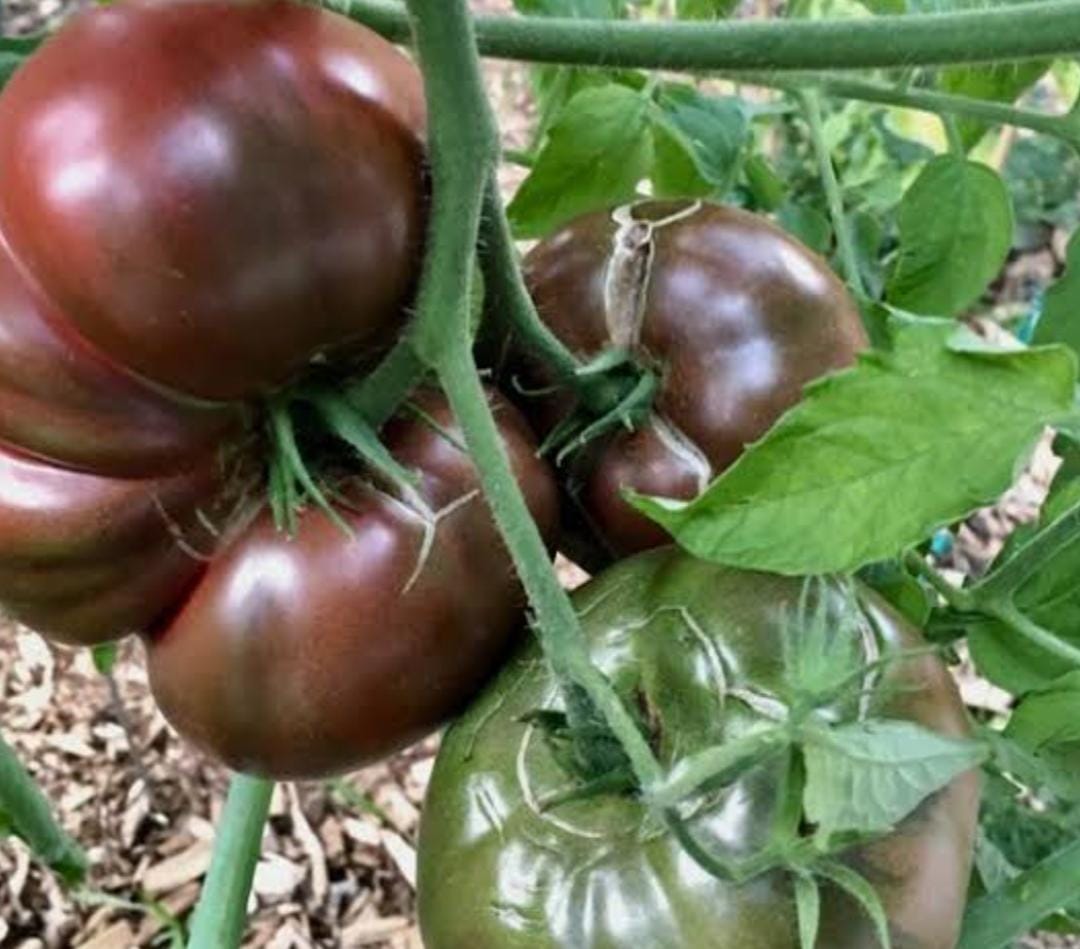
Cherokee Purple tomato is one of the most intriguing tomatoes in a garden. It scarcely resembles the traditional tomato that most people think of. The fruit takes on a dark rose, purplish-brown color, sometimes with greenish shoulders around the stem, rather than a brilliant, uniform red skin. The form can be highly lobed, asymmetrical, and occasionally just plain ugly.
After that, you cut it open.
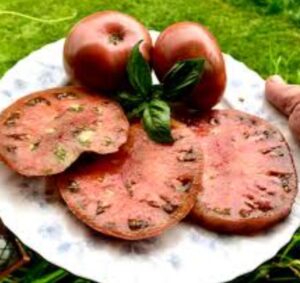
The flesh inside is very delicious and velvety, brick-red, with comparatively little seed holes. Cherokee Purple is one of the most well-known heirloom tomatoes cultivated by home gardeners because of its rich, sweet, savory, and complex flavor.
However, this tomato is more than just a well-known brand and a tasty sandwich component. Even seasoned gardeners may be surprised by the Cherokee Purple tomato’s unique genetics, unique growth needs, and intriguing history.
Knowing such traits is crucial if you plan to build it. Although Cherokee Purple can produce exceptional fruit, it doesn’t always act like the consistent, disease-resistant hybrids that are frequently available in garden centers.
What Is Cherokee Purple?
Cherokee Purple tomato (Solanum lycopersicum) is an open-pollinated, indeterminate, heritage beefsteak tomato variety.
According to Cornell University’s Vegetable Varieties for Gardeners database, this main-season variety yields 5-by-3½-inch pinkish fruits with deeper pink-purple shoulders and brick-red flesh. It typically takes 70-85 days to mature, while actual harvest timing varies according to climate, transplant age, temperature, sunshine, and growth circumstances.
Gardeners should be very aware of the phrase indeterminate.
Unlike determinate tomatoes, which eventually cease expanding their main stems and concentrate much of their output into a very short period, an indeterminate tomato continues to produce vegetative growth and flower clusters as long as environmental circumstances are appropriate. That implies the Cherokee Purple tomato needs space.
It also needs assistance. A mature plant may grow into a large vine, and permitting it to spread without a strategy makes harvesting, watering, disease care, and insect inspection much more difficult. The fruit itself is another distinguishing characteristic. Cherokee Purple tomato is often huge, squishy, irregular beefsteak fruits rather than tiny, firm tomatoes intended for shipment.
And their softness is both an advantage and a disadvantage.
The Story Behind the Name
Cherokee Purple tomato’s history is intriguing, but it’s vital to distinguish between recorded history and familial custom. According to the University of Arkansas Cooperative Extension, Craig LeHoullier acquired seeds in 1990 from John Green of Sevierville, Tennessee. Green apparently received the seed from a neighbor, who said the tomato had been passed down through her family for centuries and that the original seed came from a Cherokee family. LeHoullier nurtured the tomato, identified its unique qualities, and finally disseminated seed via seed exchanges under the name Cherokee Purple. The variety became more frequently accessible about 1993.
The myth is thus best defined as an heirloom legend backed up by verifiable modern history, rather than a scientifically confirmed account of the cultivar’s precise origin. That is an important distinction. There is no broadly acknowledged scientific record that supports every aspect of the tomato’s origins. Even the University of Arkansas acknowledges that the family narrative is part of the variety’s folklore.
Nonetheless, the present history is clear: in 1990, LeHoullier discovered a separate Tennessee seed line, which he picked and named, and the tomato was later added to the heritage seed collection. That cycle of preservation is one of the reasons why heirlooms are so intriguing. A gardener does not only purchase a tomato variety. They take part in a living history of seed conservation, selection, trade, and cultivation.
Why Does Cherokee Purple Look Purple?
Cherokee Purple tomato, despite its name, is not actually purple in the same way as purple eggplant or purple cabbage are. Its distinct look is caused by the combination of skin color, underlying flesh color, and pigment chemistry. Tomatoes exhibit various combinations of carotenoid pigments, skin pigmentation, and flesh hue. Cherokee Purple produces a dark, dusky look that ranges from rose and reddish-purple to brownish-purple.
Even when the fruit is physically mature, the shoulders may still be green. That can lead to a typical issue for first-time growers: waiting for the entire tomato to turn brilliant red.
It never does.
By the time they know the tomato is ripe, it may have gotten overripe or started to deteriorate.
Cherokee Purple tomato needs gardeners to understand its unique maturity signals rather than depending on the visual criteria used for traditional red tomatoes. When carefully tested, the fruit should feel somewhat softer, and the overall color should have taken on its typical dark tone.
The green shoulder does not always indicate that the tomato is unripe. The University of Arkansas Extension expressly states that the stem-end shoulders might remain green even after the fruit is fully ripe.
What Does Cherokee Purple Tomato Taste Like?
Here is when the variety truly earns its reputation. Cherokee Purple tomato is valued largely as a fresh-eating tomato. The flesh is juicy and delicate, and the flavor is more nuanced than the simple sweetness found in most commercial tomatoes.
Gardeners frequently characterize it with phrases like:
- Sweet
- Rich
- Savory
- Smoky
- Fruity
- Tangy
- Deeply tomato-like
Genetics influences flavor, but so do growth environment, maturity, sunshine, temperature, water availability, and plant health. That means you shouldn’t expect every Cherokee Purple planted in every garden to taste the same. A tomato left to ripen naturally on a healthy plant in good conditions might provide a significantly different eating experience than a fruit plucked prematurely for transportation.
This is one of the reasons why heritage tomatoes are popular among home gardeners. They were not mainly chosen to withstand long-distance transportation. They were chosen and kept because gardeners valued traits including flavor, beauty, and eating quality.
Why You Rarely See Cherokee Purple Tomato in Supermarkets
Cherokee Purple tomato exemplifies an essential distinction between garden and commercial tomatoes. Commercial tomatoes frequently have to resist harvesting, packaging, shipping, storage, handling, and retail display. Firmness and homogeneity might thus be advantageous characteristics. Cherokee Purple has nearly the opposite personality.
The flesh is delicate and quite delicious, and the fruit might be uneven in form. These features make it fantastic on a plate but difficult to ship in a box. According to the University of Arkansas Extension, the Cherokee Purple tomato does not travel well and is hence unusual in traditional grocery store supply chains. For the home gardener, such vulnerability becomes an asset.
Your backyard may supply something the shop cannot: a ripe Cherokee Purple picked at just the right time and consumed within hours.
Starting Cherokee Purple From Seed
Cherokee Purple tomato is open-pollinated; thus, gardeners may store seed from properly isolated plants to preserve the variety from generation to generation. Open-pollinated does not imply that cross-pollination is impossible. It indicates that the variety may reproduce through seed while retaining its distinguishing qualities if pollination is done correctly and the seed is preserved correctly. Tomatoes are largely self-pollinating, making seed storage very simple.
To start your own plants, put seeds indoors several weeks before the anticipated outdoor planting date. Instead of using a worldwide calendar date, use your local frost-free date to determine the exact timing. After the seedlings emerge, provide them with plenty of light. Insufficient light might result in elongated, fragile stems that suffer following transplantation.
Maintain appropriate moisture without keeping the seed-starting media constantly wet. Young roots require both oxygen and water. Once seedlings have developed several true leaves and the outdoor conditions are acceptable, gradually adapt them to direct outdoor conditions.
This hardening-off time is especially crucial since indoor-grown seedlings have not had the same exposure to direct sunshine, wind, temperature variations, and reduced humidity as outside seedlings.
Choosing the Right Location
Cherokee Purple tomato requires the same essential growth conditions as productive tomatoes: bright sunshine, fertile soil, appropriate moisture, and good air movement. A position with 6-8 hours of direct sunshine is a good aim for productive home gardening. Sunlight promotes photosynthesis, which provides the plant with the carbohydrates and energy it requires for growth and fruit production.
Avoid planting Cherokee Purple tomato in areas where tall objects or surrounding plants will throw significant shade for most of the growing day. Good air circulation is also important. Dense foliage that remains damp for extended periods of time might foster the growth of foliar diseases. That does not imply you should remove the plant’s leaves. The leaves are the plant’s photosynthetic apparatus.
Instead, the objective is to combine reasonable spacing, adequate support, careful watering, and the elimination of truly unhealthy material.
Soil Requirements
Cherokee Purple tomato doesn’t require magical soil. It demands healthy, well-drained soil that can deliver water, oxygen, and nutrients to a large root system. A fertile loam or loam-like garden soil is often suited.
The key point is balance.
Extremely compacted soil inhibits root development and drainage. Extremely sandy soil may drain excessively quickly and have little nutrient retention capability. Poorly drained soil can deprive roots of oxygen, promoting root issues. Incorporating mature organic matter prior to planting can enhance soil structure and water-holding properties, especially in soils in poor physical condition.
But don’t assume that more fertilizer equals more tomatoes. Excess nitrogen can promote rapid vegetative growth at the expense of healthy reproductive development. The goal isn’t to grow the largest possible tomato plant. The goal is to build a plant that can maintain healthy leaves, flowers, fruit, and roots all at the same time.
Watering Cherokee Purple Correctly
Water management is one of the most critical aspects of cultivating large-fruited tomatoes. Cherokee Purple tomato has a lot of fruit, and an erratic water supply can lead to physiological issues, including cracking. The best technique is to offer continuous moisture rather than switching between extreme dryness and excessive soaking. Water deeply enough to hydrate the root zone, and then let the soil drain properly.
Whenever feasible, irrigate the soil surface rather than continually watering the leaves. Drip irrigation or a well-directed hose can help keep leaves dry while providing water to the root zone. Mulching can also help to prevent evaporation and stabilize soil moisture levels. Organic mulch, such as clean straw or suitably decomposed material, can help keep soil from drying out between irrigations.
The key idea is consistency. A tomato plant that endures drought stress followed by abrupt heavy watering may absorb water quickly, but the fruit cannot always withstand the subsequent rise in internal pressure. Cracking can occur.
Supporting the Indeterminate Vine
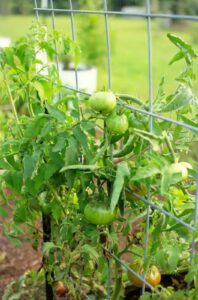
Don’t wait until the Cherokee Purple tomato grows into a massive, tangled plant before selecting how to maintain it. Install the support system early on. A durable tomato cage, trellis, stake system, or other robust structure can be employed, as long as it can hold a mature indeterminate plant and its hefty fruit. Remember that beefsteak tomatoes aren’t light.
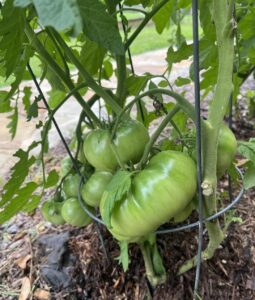
A huge fruit suspended on a flexible limb can cause significant mechanical stress. Supporting the plant keeps the fruit off the ground, making picking easier and simplifying inspection. It can also help arrange the canopy, although the plant should not be clipped severely, only to look neat.
Should You Prune Cherokee Purple?
There is no specific pruning procedure that all gardeners must use. Pruning can help manage an indeterminate tomato, especially if the plant is grown vertically. Remove some superfluous branches to increase access and make tying the plant simpler. However, severe trimming might result in a reduction in leaf area. Photosynthesis is the process by which leaves convert sunlight into carbohydrates.
Removing a considerable proportion of healthy foliage might impair the plant’s capacity to provide the energy needed for growth and fruit production. There is no use in reducing a robust tomato to an almost leafless skeleton.
Flowers, Fruit Set, and Catfacing
One of Cherokee Purple tomato’s endearing flaws is its tendency to produce strangely shaped early fruit. According to the University of Arkansas, catfacing is widespread in early-season Cherokee Purple fruits. Catfacing causes deep scars, pits, folds, or warped surfaces, and inadequate fertilization is one contributing factor to this disorder.
This might be concerning if you have never cultivated the variety before. When you see your first huge tomato, you might wonder if anything went horribly wrong.
Frequently, it has not.
Early-season flowers are more vulnerable to extreme temperatures and other environmental challenges. Fruit produced under these circumstances may be deformed, even if later tomatoes grow properly. According to the University of Arkansas, the Cherokee Purple tomato frequently produces more regularly shaped tomatoes later in the season following the initial flush of very large, sometimes unappealing fruit.
Don’t assess the entire plant just on its first tomato.
Cracking: One of the Major Challenges
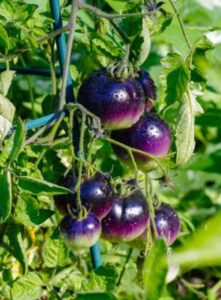
Cherokee Purple tomato has a reputation for cracking, and testing evidence backs up the claim. Cherokee Purple generated high yields in an NC State heritage tomato trial, but it was also noted to have severe cracking, green shoulders, bursting, roughness, and an uneven form. Cracking happens when the fruit grows faster than the skin can handle. Rapid changes in water supply might raise the danger.
You cannot control the weather, but you may alleviate unneeded tension by:
- Maintaining consistent soil moisture
- Mulching the root zone
- Avoiding extreme drought followed by flooding
- Harvesting mature fruit promptly
- Providing good overall plant nutrition
- Avoiding unnecessary physical damage to developing fruit
Cracking does not immediately render the tomato useless. A freshly broken fruit can still be edible if picked quickly and checked for deterioration. However, damaged fruit should not be left on the plant for too long since fractures might allow germs to enter and speed up degradation.
Disease Considerations
One of the most common misunderstandings regarding heirloom tomatoes is that each variety is inherently disease-prone.
The reality is more complex.
Cherokee Purple tomato has demonstrated beneficial adaptation in several warm, humid climates. According to the University of Arkansas, it is very disease-resistant and thrives in the Middle South’s heat and humidity. Cherokee Purple is also listed in the plant database of North Carolina State University as a tomato cultivar that thrives in the heat and humidity of North Carolina.
However, relative disease resistance is not equivalent to genetic resistance to specific infections. Many current commercial hybrids include verified resistance packages to certain illnesses. Heirlooms frequently do not. According to Iowa State University Extension, heritage tomatoes are less productive than hybrid tomatoes and more sensitive to illnesses and disorders.
For the Cherokee Purple tomato, healthy cultural traditions are still crucial.
Rotate tomato-family crops whenever possible, give proper spacing, limit undue leaf wetness, remove severely damaged plant material, eliminate weeds that may house pests or diseases, and clear up plant waste at the end of the season. Most essential, do not diagnose an illness solely because a leaf has turned yellow.
Common Pests and Cherokee Purple Tomato
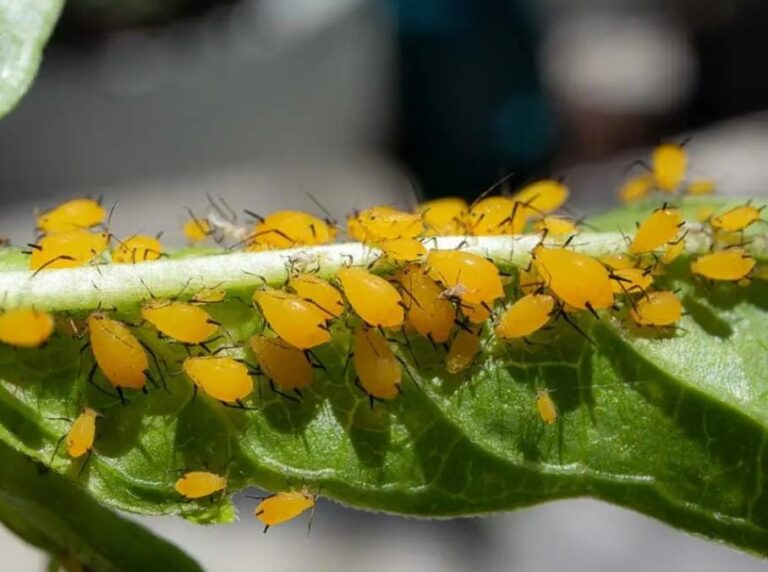
Cherokee Purple tomato is susceptible to the same broad range of tomato pests as other varieties. Depending on your area, you may come across tomato hornworms, aphids, whiteflies, stink bugs, flea beetles, and numerous caterpillars.
The most effective first response is observation.
Inspect the undersides of the leaves. Check for biting marks, eggs, larvae, deformed new growth, sticky honeydew, or strange coloring. Large caterpillars, such as hornworms, can occasionally be removed manually. For lesser pests, promoting beneficial insects and preserving plant variety can help with biological management.Don’t use a broad-spectrum pesticide just because you notice an insect.
Not all insects are pests.
Some are pollinators, predators, decomposers, or mere visitors. Tomato leaves can change color for a variety of causes, including aging, nutritional deficiencies, environmental stress, and disease.
Feeding the Plant
Cherokee Purple tomato produces heavily when conditions are suitable, but fertilizer should be administered based on soil fertility rather than guessing. A soil test is far more instructive than simply adding fertilizers. Nitrogen demands special consideration. Too little nitrogen can inhibit growth and result in pale leaves. Too much can lead to excessive vegetative growth.
Phosphorus and potassium are necessary minerals, but adding big amounts just because a fertilizer label says blooming or fruiting isn’t always useful if your soil already has enough. Healthy soil management is about giving the plant what it needs rather than collecting fertilizer in the soil. This is especially crucial in long-term garden beds, where nutrients can accumulate over numerous seasons.
Harvesting Cherokee Purple Tomato
Knowing when to harvest is one of the most satisfying aspects of cultivating this cultivar. Don’t wait for Cherokee Purple tomato to turn brilliant red. Instead, look for the distinctive dark hue and little softening of the fruit. Because the shoulders might stay green, color alone can be deceptive. A helpful strategy is to become acquainted with the texture of the fruit as it progresses from immature hardness to ripe softness.
Harvest cautiously. Cherokee Purple tomato is a delicate tomato, so avoid repeatedly squeezing it or putting it into a basket containing hard fruit. If a tomato begins to break, check it thoroughly and harvest it instead of leaving the damaged fruit on the plant.
How to Eat Cherokee Purple Tomato
This is a tomato that deserves to be eaten simply. A thick slice with a little salt can reveal more about the variety than a complicated recipe. It is particularly well suited to:
Fresh sandwiches
A thick Cherokee Purple tomato slice can transform an ordinary sandwich because of its combination of juiciness, softness, and concentrated tomato flavor.
Salads
Pair it with basil, cucumber, onion, fresh herbs, or mild cheese.
Tomato toast
Spread good bread with olive oil or another suitable topping and add thick slices of fully ripe Cherokee Purple.
Caprese-style dishes

Its unusual color makes it visually interesting alongside basil and fresh mozzarella.
Fresh salsa
Because it is juicy and soft, it can contribute excellent flavor to fresh preparations, although the finished mixture may be wetter than one made from firmer tomatoes. For cooking, Cherokee Purple can certainly be used, but its greatest strength is arguably the fresh-eating experience.

Can You Save Cherokee Purple Tomato Seeds?
Yes. One of the advantages of cultivating Cherokee Purple is that it is open-pollinated, which allows for seed preservation. Choose fruit from a healthy plant that exhibits the features you wish to maintain. Tomato seeds are protected by a gelatinous covering. Fermentation is a typical technique used during seed preservation to help remove the coating and enhance cleanliness.
After processing, seeds should be completely dried before storing. Store them in a cool, dry place, and mark the container with the cultivar name and year. Remember that open-pollinated does not imply genetic purity if pollen from another tomato variety fertilizes the bloom. One of the advantages of cultivating Cherokee Purple is that it is open-pollinated, which allows for seed preservation.
Choose fruit from a healthy plant that exhibits the features you wish to maintain. Tomato seeds are protected by a gelatinous covering. Fermentation is a typical technique used during seed preservation to help remove the coating and enhance cleanliness. After processing, seeds should be completely dried before storing.
Store them in a cool, dry place, and mark the container with the cultivar name and year.
Tomatoes are generally self-pollinating, thus accidental crossing is less prevalent than in crops like squash or maize, but it still happens. If maintaining varietal purity is critical, employ appropriate isolation or controlled pollination techniques.
Different Required Climates
Climate has a significant impact on tomato performance. A grower in a warm, humid climate may have a totally different Cherokee Purple tomato season than someone planting it in a short-season northern garden. Cornell estimates 70-85 days to maturity, whereas extension resources often place the variety in the latter half of the tomato season.
In a short growing season, starting healthy transplants indoors can make a big difference. In hot areas, severe heat can disrupt pollen function and fruit set. In milder climes, the problem might simply be that the growing season ends before the latter fruit has fully ripened.
This is why “days to maturity” should be seen as a suggestion rather than a guarantee. Temperature, day length, soil conditions, transplant size, sunshine, and plant stress are all factors that impact the calendar.
Is Cherokee Purple Tomato Worth Growing?
Yes—but not because it is the simplest tomato. If your primary aim is high production, consistent fruit, extended shelf life, and disease resistance, contemporary hybrid cultivars may exceed Cherokee Purple. However, if you want outstanding flavor, a distinctive look, seed-saving potential, and the joy of producing a tomato with a historical history, Cherokee Purple is a must-have in your garden. Cornell’s gardener ratings mirror this balance: the variety obtains exceptionally high marks for flavor, but yield and ease/reliability are slightly less excellent.
That is a helpful method to consider heirlooms in general. They aren’t necessarily intended to win every category. Instead, they frequently excel in traits that gardeners appreciate, but that commercial production does not necessarily prioritize.
Conclusion
Cherokee Purple tomato is an excellent illustration of how gardening involves more than just growing food. The plant might be cumbersome. The fruit may be bumpy. The shoulders might remain green. Early tomatoes may be catfaced. The skin might crack. The fruit is delicate and tough to move. However, when you slice one open at optimal ripeness, those flaws become considerably less noticeable.
The rich brick-red interior, strong juiciness, and nuanced flavor are the reasons why this heirloom has remained popular decades after its contemporary introduction into the seed trade. Its history also demonstrates that plant types endure because people choose to preserve them.
A seed passed down from one gardener to another may travel through families, towns, seed exchanges, and generations before reaching a new garden. When you plant Cherokee Purple, you’re doing more than just growing tomatoes. You’re cultivating an example of agricultural biodiversity.
You’re conserving an open-pollinated cultivar.
Furthermore, if you conserve seed properly, you may be able to pass on that genetic heritage to another grower. For a home grower, the most appealing aspect of the Cherokee Purple tomato is that it provides exceptional flavor now while still allowing you to store something for the future.
Disclaimer
The content provided on this website is purely for educational purposes. We are neither nutritionists nor do we intend to mislead our readers by providing any medical or scientific information.