Mulching Strategies for 6 Dynamic Soils
Introduction
Many gardeners see mulching as a simple way to prevent weeds and retain moisture, but its effectiveness depends heavily on the underlying soil. Soil is a complex ecosystem that includes organic matter, water, air, minerals, and microbes, all of which influence moisture retention and nutrient cycling.
Mulch improves soil structure by enhancing the arrangement of soil particles and supporting beneficial organisms, rather than permanently changing soil texture. Different soil types impact water flow: sandy soils drain quickly, clay soils retain water but limit aeration, and silty soils are prone to erosion.
Moreover, mulch affects soil temperature, protecting roots from summer heat and winter freeze-thaw cycles. However, excessive insulation in poorly drained soils can hinder warming in spring. Therefore, local climate and soil characteristics should guide mulching strategies.
Instead of viewing mulching purely as an aesthetic choice, gardeners should ask, “What is the best mulch for my soil?” This approach transforms mulching into a strategic tool that promotes plant health. This guide will discuss how various soil types respond to different mulching materials.
Understanding Soil Texture: The Foundation of Every Mulching Strategy
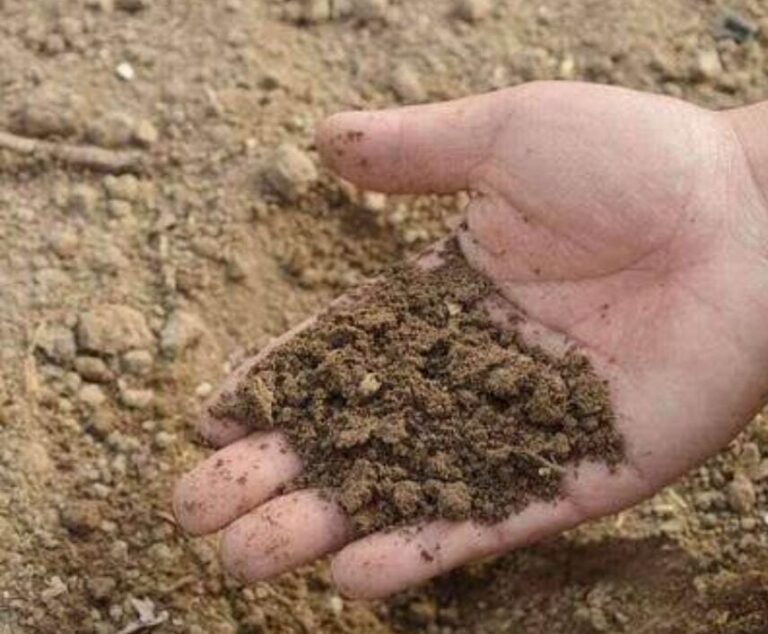
Before deciding on a mulch, it’s crucial to understand why soils act differently. Soil texture is defined by the proportions of sand, silt, and clay, three mineral particle sizes that affect everything from water flow to microbial activity. Although these particles look identical to the human eye, their size, surface area, and capacity to interact with water and nutrients result in vastly diverse growth conditions.
Texture influences how quickly rainfall penetrates the ground, how much moisture is accessible to plants, how easily roots penetrate the soil, and how well nutrients are retained. Mulch’s efficiency is heavily influenced by the texture of the soil underneath it, as it changes many of the same processes.
The Three Primary Soil Particles
1. Sandy Soil: Fast Draining but Nutrient Poor
Sand particles are the largest mineral components of soil, measuring between 0.05 and 2 millimeters in diameter. Their relatively large size creates wide pore spaces that allow water and air to move freely through the soil profile.
This excellent drainage reduces the risk of waterlogging but comes with significant drawbacks. Water often passes beyond the root zone before plants can absorb it, carrying valuable nutrients such as nitrogen and potassium with it—a process known as nutrient leaching. As a result, sandy soils tend to dry quickly, warm rapidly in spring, and require more frequent irrigation than other soil types.
While these characteristics make sandy soils easy to cultivate, they also mean that mulch must focus on slowing water loss, reducing nutrient movement, and gradually increasing organic matter.
2. Silty Soil: Naturally Fertile but Easily Compacted
Silt particles are of intermediate size, falling between sand and clay. When dry, they seem smooth or floury, but when damp, they feel silky. Silty soils store far more moisture and nutrients than sandy soils due to their modest surface area, while still allowing for adequate drainage. With these benefits, silt is naturally productive for many crops. However, wind and rain can easily disperse its tiny particles.
Raindrops, when left exposed, can break away the soil surface, generating a hard crust that limits seedling emergence and hinders water entry. Mulch serves largely as a protective cover in silty soils, absorbing the impact of rainfall while retaining the soil’s naturally advantageous structure.
3. Clay Soil: Nutrient Rich but Challenging to Manage
Clay is made up of the tiniest mineral particles, each smaller than 0.002 millimeters in diameter. Despite their small size, clay particles have a large surface area that may attract and retain positively charged nutrients like calcium, magnesium, and potassium.
This nutrient-holding capability explains why clay soils are frequently naturally fruitful. However, their small pore gaps impede down water transport and oxygen exchange. big clay soils can remain moist for days after a big rain, stressing plant roots and favoring disease-causing organisms.
The opposite situation happens during prolonged periods of dryness. Water evaporates, clay particles shrink, and the soil contracts, resulting in extensive fractures that expose roots and disturb new plants.
Why Loam Is Often Called the Ideal Garden Soil
Loam is not a distinct mineral, but rather a balanced mixture of sand, silt, and clay. This blend maximizes the advantages of each particle size while minimizing their disadvantages.
Healthy loam typically offers:
- Excellent drainage without excessive water loss.
- High nutrient availability.
- Good root aeration.
- Stable soil aggregates.
- Strong microbial activity.
- Easy cultivation.
Because loamy soil already has many excellent traits, mulching solutions prioritize conserving these benefits over resolving severe shortcomings. Organic mulches promote biological activity, replace organic matter, and protect soil from erosion while preserving its natural balance.
Soil Texture vs. Soil Structure: Understanding the Difference
Many gardeners use the phrases texture and structure interchangeably, but soil scientists differentiate between the two because they represent quite distinct properties.
Soil texture is defined as the percentage of sand, silt, and clay particles. It is basically permanent, changing only on geological timeframes.
Soil structure, on the other hand, depicts how these particles are organized into bigger groups called aggregates. Unlike texture, structure may develop or degrade in just a few growing seasons depending on how the soil is treated.
Healthy aggregates develop a complex network of pores that serve two equally vital functions:
- Macropores allow rapid movement of air, water, and growing roots.
- Micropores store water that plants can access between rainfall or irrigation events.
When soil loses structure due to compaction, excessive tillage, or erosion, the pore spaces collapse. Roots face increased resistance, oxygen becomes scarce, water infiltrates more slowly, and helpful microbes decrease. One of the most significant long-term benefits of mulch is its capacity to encourage biological processes that organically restore soil structure.
How Organic Mulch Improves Soil Structure
Unlike synthetic landscaping textiles and beautiful stone, organic mulches progressively feed the soil ecology. Mulch decomposes to power an astonishing community of life, which includes:
- Earthworms
- Beneficial bacteria
- Mycorrhizal fungi
- Actinomycetes
- Springtails
- Mites
- Protozoa
- Nematodes
Every creature plays a distinct role. Earthworms incorporate organic stuff into deeper soil layers while building channels to increase drainage and aeration. Fungal hyphae act as minuscule threads, binding soil particles together to form stable aggregates. Bacteria breakdown basic organic substances, providing nutrients that plants may easily absorb.
These biological activities work together to generate natural binding agents that stabilize soil, expand pore space, promote infiltration, and strengthen erosion resistance. Instead of pushing soil to adapt, mulch enables the soil ecosystem to develop on its own.
Why Matching Mulch to Soil Type Matters
Each mulch affects four important characteristics of the soil environment:
- Moisture dynamics
- Soil temperature
- Biological activity
- Organic matter accumulation
The way these changes effect plant development is totally dependent on the soil beneath.
A dense coating of straw, for example, may significantly limit evaporation in sandy soil, allowing plants to withstand lengthy periods of drought. The same layer applied to poorly drained clay may keep the surface overly moist, delaying spring warming and producing an environment conducive to fungal infections.
Similarly, coarse wood chips can promote aeration on compacted clay by boosting fungal activity and earthworm movement, although extremely fine compost may be more appropriate for quickly draining soils when enhancing water-holding capacity is the primary aim.
These examples demonstrate an essential idea.
Successful mulching is not about choosing the “best” mulch. It is about choosing the mulch that complements your soil’s natural strengths while compensating for its weaknesses.
Mulching Strategies for Sandy Soil: Turning a Challenging Soil into a Productive Growing Medium
Sandy soil is often regarded as one of the most challenging soil types for gardeners, however this reputation is only partially justified. While its fast drainage and limited nutrient-holding capacity may make gardening more difficult, they also provide great aeration and allow roots to penetrate with little resistance. Instead of battling sandy soil, effective gardeners learn to handle its limitations while capitalizing on its inherent potential. Mulch plays an important part in attaining this equilibrium.
Unlike heavier soils, sandy soils seldom experience protracted waterlogging or severe compaction. Its greatest issue is keeping adequate moisture and nutrients in the root zone for plants to use. A successful mulching approach focuses on slowing water flow, boosting biological activity, and progressively increasing organic matter, which increases the soil’s ability to retain both water and nutrients.
Why Sandy Soil Loses Water So Quickly?
To understand why mulch works so well on sandy soil, first consider how water flows beneath the surface. Massive sand particles produce similarly massive pore spaces, known as macrospores. Following rainfall or irrigation, gravity draws water quickly through these pores, allowing surplus moisture to drain practically instantaneously. While this great drainage protects roots from oxygen deprivation, it also leaves little water accessible for plants.
Sandy soils have limited capacity to hold water against gravity, resulting in frequent periods of water stress that can reduce photosynthesis, slow root development, and limit fruit or flower production. During hot weather, sunlight heats the exposed soil surface, causing moisture to evaporate quickly. Heavy watering may only provide temporary relief before the soil dries again.
Mulch disrupts this cycle by forming an insulating barrier between the soil and the atmosphere. Instead of allowing solar radiation and wind to evaporate moisture straight from the surface, mulch slows evaporation, making water available to plant roots for a significantly longer length of time.
Mulching Strategies for Clay Soil: Improving Structure Without Trapping Excess Moisture
At first appearance, clay soil appears to contain everything a grower might desire. It is naturally rich in minerals, retains nutrients remarkably well, and does not dry out as rapidly as sandy soil. However, anybody who has tried digging through thick clay after a downpour or during a summer drought understands that fertility alone does not ensure robust plant development. Clay’s nutrient-rich characteristics also make it difficult to grow in the garden.
Unlike sandy soils, where mulch is primarily used to preserve moisture, the goal with clay soils is to achieve a healthy balance of water retention and airflow. Plant roots require oxygen and water in equal measure, and clay soils frequently struggle to give both at the same time. An effective mulching method, therefore, focuses on enhancing soil structure, increasing biological activity, and protecting the surface from compaction rather than merely retaining additional moisture.
Transitioning to More Balanced Soils
Sandy and clay soils are at opposing extremes of the soil texture continuum, and each requires a totally different mulching method. Most gardens, however, are somewhere in between these two extremes. Loamy soils already have a good mix of drainage, aeration, and nutrient retention; thus, the purpose of mulch switches from treating serious deficiencies to conserving an existing healthy environment.
Mulching Strategies for Loamy Soil: Preserving Nature’s Ideal Balance
Loam is often considered the gardener’s gold standard. It combines sand drainage, silt fertility, and clay nutrient-holding ability to provide a well-balanced growth medium that can sustain a wide variety of plants. Healthy loam is simple to grow, full of biological activity, and inherently resistant to environmental stress. However, this ideal state is not permanent. Without careful treatment, even the finest soil progressively loses organic content, gets compacted, and sees a decline in biological diversity.
Mulching in loamy soils is about conserving an existing functional ecosystem rather than repairing inadequacies. Instead of drastically changing the soil’s physical attributes, mulch helps to maintain the delicate balance of moisture, aeration, nutrient cycling, and microbial activity that makes loam so fruitful.
Mulching Strategies for Silty Soil: Protecting Fertility from Erosion and Surface Crusting
Silty soil is often overshadowed by discussions of sandy and clay soils, yet it occupies an important middle ground with its own unique strengths and vulnerabilities. Rich in mineral nutrients and capable of holding adequate moisture, silty soils are naturally productive and support vigorous plant growth. However, their fine particles are easily displaced by wind and water, making erosion one of their greatest long-term threats.
Unlike sandy soils that lose water rapidly or clay soils that retain it excessively, silty soils are primarily challenged by the stability of their surface. When left exposed, rainfall can rapidly dismantle the soil’s structure, forming a dense crust that limits water infiltration, restricts oxygen exchange, and creates a barrier for germinating seeds.
For silty soils, mulching functions primarily as a protective armor that preserves structure while sustaining the biological activity responsible for maintaining fertility.
Mulching Strategies for Peaty Soil: Managing Moisture Without Sacrificing Soil Health
Peaty soils are distinct from other soil types because they are primarily made up of partially decomposed organic matter rather than mineral particles. These soils form over thousands of years in waterlogged environments where decomposition occurs slowly. As a result, they are naturally rich in carbon and have an exceptional ability to retain moisture.
At first glance, peat may seem like a gardener’s dream. It is soft, easy to cultivate, and retains significant amounts of water. However, these same qualities can also lead to specific challenges. Excess moisture retention, acidic conditions, and nutrient imbalances can limit plant growth if the soil is not managed properly. When mulching peaty soil, the goal is not to increase water-holding capacity—as one would do with sandy soil—but to protect the soil’s structure while maintaining adequate aeration and supporting balanced nutrient cycling.
Mulching Strategies for Chalky Soil: Conserving Moisture and Improving Nutrient Availability
Chalky soils present almost the opposite challenge of peat. Derived from limestone or chalk bedrock, they are typically alkaline, free-draining, and often shallow. Although water moves readily through these soils, certain nutrients—particularly iron, manganese, and zinc—become less available under alkaline conditions.
Plants growing in chalky soil frequently experience nutrient deficiencies despite the nutrients being present in the soil. The problem lies not in nutrient quantity but in their reduced availability at high pH. level. Mulch cannot change the parent material of chalky soil, but it can improve growing conditions by increasing organic matter, reducing evaporation, and enhancing biological activity.
Organic vs. Inorganic Mulches: Which Is Best for Different Soil Types?
Not all mulch materials contribute equally to soil improvement. Understanding the differences between organic and inorganic mulches allows gardeners to make better long-term decisions.
Organic Mulches
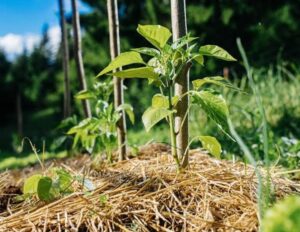
Organic mulches originate from plant or animal materials and gradually decompose, enriching the soil over time.
Examples include:
- Compost
- Straw
- Wood chips
- Bark
- Shredded leaves
- Pine needles
- Grass clippings
Advantages
- Improve soil structure.
- Increase organic matter.
- Feed beneficial microorganisms.
- Encourage earthworm activity.
- Enhance nutrient cycling.
- Improve long-term soil health.
The primary disadvantage is that organic mulches eventually decompose and require periodic replenishment.
Inorganic Mulches
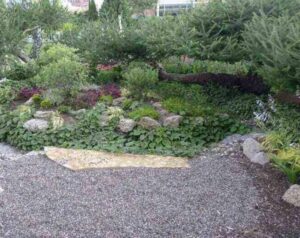
Inorganic materials include gravel, decorative stone, rubber mulch, and synthetic landscape fabrics.
These materials decompose very slowly or not at all and create big trouble in the mulching process.
Advantages
- Long-lasting.
- Excellent weed suppression in certain situations.
- Suitable for pathways, xeriscapes, and ornamental landscapes.
Limitations
Unlike organic mulches, inorganic materials do not:
- Feed soil organisms.
- Improve aggregation.
- Increase organic matter.
- Contribute nutrients.
Stone mulching may also absorb and radiate considerable heat during summer, increasing root-zone temperatures around sensitive plants. For productive gardens, organic mulches generally provide greater long-term benefits because they improve both the physical and biological properties of soil.
Seasonal Mulching Adjustments for Every Soil Type
Although soil texture determines the overall mulching strategy, seasonal conditions influence how mulch should be managed throughout the year.
Spring
- Refresh decomposed mulch.
- Avoid excessively thick layers that delay soil warming.
- Check for compacted mulch restricting airflow.
Summer
- Maintain consistent mulch coverage to reduce evaporation.
- Replace areas disturbed by wind or irrigation.
- Monitor soil moisture beneath the mulch rather than relying solely on surface appearance.
Autumn
- Apply shredded leaves or compost to replenish organic matter.
- Protect exposed soil after harvesting annual crops.
- Prepare perennial beds for winter.
Winter
- Maintain mulch around perennial plants to reduce temperature fluctuations.
- Protect shallow-rooted species from frost heaving.
- Avoid piling mulch directly against woody stems.
Seasonal adjustments ensure that mulch continues supporting soil health under changing environmental conditions.
Common Mulching Mistakes That Can Harm Soil
Even the highest-quality mulch can become counterproductive when applied incorrectly.
Some of the most common mistakes include:
Applying Mulch Too Deeply
Excessively thick mulching material reduces oxygen movement and may trap excessive moisture around plant crowns.
Creating “Mulch Volcanoes”
Piling mulching materials against tree trunks keeps bark continuously moist, increasing the risk of decay, insect damage, and disease.
Ignoring Soil Type
Applying identical mulching strategies across every garden bed overlooks the fundamental differences between sandy, clay, loamy, silty, peaty, and chalky soils.
Using Fresh Wood Chips in Vegetable Beds Without Planning
Fresh woody materials decompose slowly and may temporarily tie up nitrogen near the soil surface. Aging the material or supplementing with nitrogen-rich compost helps avoid this issue.
Leaving Soil Bare Between Growing Seasons
Bare soil loses moisture, erodes more easily, experiences greater temperature fluctuations, and supports fewer beneficial organisms than protected soil.
Conclusion
Successful mulching begins with the understanding that different soils have unique needs. Sandy soils struggle with water retention, clay soils face compaction issues, silty soils require protection from erosion, and loamy soils thrive when well-balanced. Using the same type of mulch across different soil types often results in inconsistent outcomes, as each soil reacts differently. Effective gardeners prioritize selecting mulch that complements their specific soil type instead of opting for a one-size-fits-all solution. This approach elevates mulching to a science-driven practice grounded in soil ecology.
Organic mulches offer benefits beyond just suppressing weeds and conserving moisture. They enrich the soil by supporting earthworms and microorganisms, enhancing nutrient cycling, and contributing to long-term soil resilience. Each application of mulch becomes an investment in future garden productivity, rather than just a superficial layer. Healthy soil develops through ongoing interactions among plant roots, microbes, organic matter, and the choices made by the gardener. By choosing mulches according to soil type, gardeners can enhance natural processes, creating richer, more balanced, and productive soils that lead to robust plants and thriving gardens over time.
Disclaimer
The content provided on this website is purely for educational purposes. We are neither nutritionists nor do we intend to mislead our readers by providing any medical or scientific information.